Catching my breath 2

It has been an incredible time over the past couple of months since I wrote the first ‘Catching my breath’ post. Here’s what I have been up to…

Like many of you, we are in lockdown here in Australia. In my ‘day job’ I work in adult education, specifically online adult education and as you can imagine, we have been ridiculously busy these past six weeks.

In addition to working fulltime, I have been a busy little author too.

  • I planned, book, and cancelled a BIG trip to the UK in June and July. I was particularly excited about this trip, because I was going to attend the RNA conference in Shropshire, meet my agent and some close author friends in Scotland (also part research trip), meet my editor and publishing team in London, and spend at least a month of that time writing while holed up with my family in Rugby. Instead, the whole thing is postponed until 2021.
  • In February, sent across my first round of edits for book 3 (and 3rd in my series), A Sunset in Sydney, and I just sent back my structural/copy edits a couple of days ago. It comes out early July so we are on track!
  • At the end of March I sent across my 4th book, The Christmas Swap, which is a stand-alone book that comes out in October.
  • My 2nd book, That Night in Paris, was published a few days ago, so my time on publicity and social media ramped up considerably this past week, and in the lead up to publication, I prepared 4 guest pieces, and arranged announcements with 4 associations. I even had a giveaway with ARRA.
  • I was an early reader for Sarah Louise Smith, Mandy Baggot, and Julie Houston‘s latest books (how could I say no?) They were all wonderful reads, by the way.
  • I’ve featured 4 authors on my site, Sasha Greene, Andie Newton, Nina Kaye, and Fiona Leitch.
  • I’ve updated my site and other author profiles with my upcoming books – covers and blurbs, and other behind-the-scenes author biz.
  • I’ve blogged about writing romance in the time of COVID.
  • Annnd, I am about to dive back into my 5th book, the 4th in the Holiday Romance series, which I started writing around this time last year and had to put aside when I commenced fulltime work. I am about 50% the way through, and for those who have read That Night in Paris (or are about to) my sneak peek is that it is about Jaelee and is set in Bali and New Zealand!

I hope you are all staying safe and well. Happy reading!

What’s in a (character) name?

writer-1421099_1280

As an author, choosing names can be one of the most fun aspects of writing or one of the trickiest.

An author can spend hours on baby name generators, or genealogy and history sites to come up with the perfect names―not only for their main characters, but every supporting character, the names of towns, and even fabricated company names. As an author, I’ve even ‘borrowed’ names from my friends, family and former students.

But why is naming so hard? For me, there are a few reasons.

Names are subjective and (often) have personal connotations for the reader

As a former schoolteacher, there are some names that I won’t touch with a barge pole, simply because they elicit memories of difficult students. Those names may be completely innocuous to most readers, but as I’ll spend the most time with my characters, they make the ‘no go’ list.

The same goes for names with varying ‘heat levels’. If I’m naming a sexy love interest, are some names off limits? Is Milo a hot guy’s name or a hot drink from Australia? Where will my readers land on Rupert (no for me) or Henry (yes for me―but only because of Cavill)?

And while I am a huge Keanu fan―and of course there are quite a few Keanu’s out there in the world, especially ones born after The Matrix came out in ‘99―it’s just too evocative of the Keanu that it’s on the ‘no go’ list too.

Names are ‘fashionable’ and ‘unfashionable’

As we know, names go in and out of fashion, with some names circling back onto the ‘fashionable’ list every other decade or so.

After the film, Splash, came out in the mid-80s, the most popular girls’ name for years was ‘Madison’―simply because a mermaid named herself after Madison Avenue in New York. Until then it was just a last name, but it might be perfect for a character born in the 80s.

And writers of historical fiction are limited even further. There probably weren’t (m)any Kylies or Kylos in the 1800s. As an aside, I have so much respect for historical fiction authors―all that research!

Names have to ‘fit’ the character

I’ve heard this from other authors, so I know I’m not the only one to do it, but sometimes I will choose a name for a character and as I am writing, I realise it doesn’t ‘fit’―that they are not an ‘Eleanor’, but more of a ‘Susan’. Of course, this ties back to my first point about names having connotations, but the name must suit the personality of the character, as it is one of the tools an author uses to evoke their characteristics.

In my 4th book, one of the characters is an actor and I’ve given him a stage name―his mother’s maiden name as his first name. And I got her maiden name from researching last names from Oxfordshire. I tried combinations of last names until I got one that just evoked ‘international film star’.

And many authors I know will name the villain or the antagonist after someone they’ve encountered in real life. It makes me wonder if there really was a ‘Hannibal’ in Thomas Harris’s life, when he penned The Silence of the Lambs.

When naming comes easily

Sometimes naming isn’t hard, like when a character arrives in my head (almost) fully formed, including their name. And some names are an homage to someone special.

In my 4th book, there are three main characters―best friends―and all their names begin with ‘L’, Lauren, Lisa, and Lucy. I have special friends with those names and writing their names into a book is a lovely way of honouring them. Even naming minor characters after people I know can a fun way to include them in my work.

So, next time a character’s name lands with you perfectly, or rubs you the wrong way, just know that the author may have agonised over that choice. And ask yourself if it hit or missed the mark because one of the reasons I’ve mentioned here.

Originally posted on Portable Magic as a stop on my blog tour for That Night in Paris.

Catching up with Author Andie Newton

Today I am very excited to welcome my friend and fellow author, Andie Newton, who is here to talk about her debut novel, The Girl I Left Behind, a taut, pacy, spy thriller set in Nazi Germany. Let’s talk to Andie!

Tell us what inspired you to write THE GIRL I LEFT BEHIND? I wrote the first words of my debut novel, The Girl I Left Behind, just over ten years ago. I never thought I’d write a novel. Ever. One day I caught a documentary on the History Channel about Nuremberg’s historic Kunstbunker, a secret art bunker the townsfolk hid from Hitler, and I was instantly intrigued. More so, the documentary talked about the youth resistance. I have a degree in History, so I suppose you can say my thoughts are already in the past. In this case, I set out to learn more about the youth of the German Resistance. I tried to find a novel on the subject and couldn’t find one, and as corny as it sounds, set out to write the novel I wanted to read.

What research did you undertake when writing The Girl I Left Behind?

I read a lot. I read diaries, interviews and news articles about resistance members. I also contacted businesses in Germany and asked questions about their past. Yep. I did that too! One of the most interesting stories that came from these emails involved the Korn und Berg bookstore in Nuremberg. They wrote me a long email relaying a story about when Hitler came into their bookstore and demanded they change the shape of their windows because they weren’t modern enough. Oh, you better believe I wrote that into this book!

What was your favourite scene to write?

My favourite scene to write was the tea scene with Ella’s aunt and her Nazi friends. There’s so much going on here than just a group of gossiping women. I’d read that Hermann Göring’s family was elevated in status after his career in the Reich took off, so I wrote that into the scene with one of the ladies. Also, well… I don’t want to give anything away, but when Ella offers to serve her aunt’s guests…ooh, I love it!

What are you working on now?

My next book will be out this summer, THE GIRL FROM VICHY. It’s about a woman who joins the French Resistance (1942) and spies on her collaborator boyfriend—a gendarme in the Vichy police. This book is about a family that is politically divided, which was really interesting to write. This book, as with THE GIRL I LEFT BEHIND, is very fast paced and full of suspense. My third book with Aria Fiction will be released in 2021. This book is still top secret, but what I can tell you is that it’s a WWII female-driven spy novel involving American women, and I absolutely love it.

When did you start writing seriously?

I started writing seriously the day I began my novel, October 3rd 2009. Really. I started with zero experience, armed only with my ideas. I think the number one thing that stops writers who have great ideas is not writing regularly. You don’t need to have years of writing experience or have longed to be an author your whole life. But you do need to sit down and write, AND then work at it every day (and hopefully get better at it). My first pages were awful. AWFUL. I just kept at it.

What do you love most about being an author?

This may shock people, but the part I love the most is also the part I hate the most: Structural edits. These are the changes my editor suggests in the form of an editorial letter. My first letter (for THE GIRL I LEFT BEHIND) was 7 pages long, my second letter (for THE GIRL FROM VICHY) was five. I think the biggest misconception is that people think an editor actually changes your manuscript, or the publisher does. Oh no, I’ve written every single word. The edit letter consists of broad suggestions, followed by smaller points. It is up to the writer to figure out how to apply those suggestions to the story.

The reason I love and hate structural edits is simple. I have to write under a deadline, which is stressful, but I love it because I can see the manuscript changing into something wonderful and strong, much stronger than it was originally, and that is why I love it. For me, the last day of edits is usually bittersweet, as it is the last time I’m knee deep in my character’s lives. What follows are the copy edits and proofs, and at this point all story elements are done.

Here’s more about Andie

Andie Newton writes female-driven historical fiction set in WWII. She’s the author of The Girl I Left Behind (Aria 2019) and The Girl from Vichy (Aria 2020). Andie holds a Bachelor degree in History and a Master in Teaching. She would love to say she spends her free time gardening and cooking, but she’s killed everything she’s ever planted and set off more fire alarms than she cares to admit. Andie does, however, love spending time with her family, trail running, and drinking copious amounts of coffee. Her next book, The Girl from Vichy, is coming in August this year.

You can find discussion questions for her novels on her website andienewton.com. And you can follow her on:

Facebook | Twitter | Instagram | Goodreads | Bookbub


#ArmchairTravel is (literally) the only way to go

chair-270980_1920

So, we are in very strange times. The world has been sent to its room and now we must find a new kind of balance in all that we do, when all that we do is in the confines of our homes.

As a lifelong traveller, someone who longs to go, see, and do, this lockdown means I need to find a new way to travel. And to do that, I will be reaching for the books of my colleagues in the travel fiction and travel biography genres.

I’ll be picking up Frances Mayes and Julie Caplin, Kiley Dunbar, Linn B. Halton, and Paige Toon. There are dozens of us who write about faraway places and evoke just what it’s like to be there.

My next book, That Night in Paris, will take you on a whistle-stop tour of Europe, and the one after that, A Sunset in Sydney, to London, Hawaii, New Zealand, and Sydney. You could even catch up on my first book, One Summer in Santorini, which will whisk you off to the Greek Islands.

So in this unprecedented time when the only way to travel is from the comfort of home, seek out your travel adventures within the pages. And from me is a promise to keep taking my readers to wonderful locations.

See you amongst the pages.

Image by Hans Braxmeier.

Love in the Time of C̶h̶o̶l̶e̶r̶a̶ COVID-19

Ahhh, love…

It truly is a magical thing, so much so that I’m building a career out of writing about it.

And of course, true love is for better or worse, for richer or poorer, and in sickness and in health―whether or not you’ve stood before witnesses and said those words out loud.

My partner of fourteen years, Ben, has been by my side through shoulder surgery, foot surgery, two visits to the emergency room (both in the US and both at ridiculous cost to my respective insurance companies, but that’s another post), anxiety attacks, bouts of depression, the worst flu I’ve ever had, inexplicable dizzy spells, migraines, that weird rash I got in Bali that lasted the better part of a year, and various maladies that have visited me from time to time just because I am a human who lives in the world.

When it comes to being unwell, he’s my person.

But I’m starting to see social media populated with THE BIG QUESTION from fellow romance authors: Do we write COVID-19 into our contemporary romances?

My short answer―and this is me speaking for myself―is ‘no’.

The longer answer―again, just me speaking for myself―is ‘definitely not’.

I’ll tell you why.

We’re already living in a world that’s post-911, post-Brexit, post-GFC, post-Aussie Bushfire Crisis, post-Trump and mid-Climate Change Crisis. There are likely others, but this list was as much as my hopefully romantic brain could summon.

And those global events do permeate contemporary fiction, including romance, even if it’s just a line about getting a work visa, the winery being lucky to escape the bushfires, admiring Greta Thunberg, popping a bottle into the recycling, or what can and can’t be taken onto a plane.

Of course, with the #MeToo movement, contemporary romance authors are (more openly) addressing consent, and as a genre, we’ve been writing about safe sex for years.

So, why add COVID-19 to the mix?

There are some clever (and fast-writing) contemporary romance authors who have already published stories where the ‘meet cute’ is having to isolate with the best friend/long lost love/biggest nemesis/ex/soon-to-be ex/taboo love interest/the one that got away.

But, I can’t…

I write travel romances―stories about finding love when you travel. And in a mid-COVID-19 world, I am struggling to find the romance in lockdown love.

And as we sit amid yet another lockdown, having to isolate and forego hugs, travel, live performances, dinner parties, and a myriad of other (close-human-contact) joys, our time to read has increased exponentially. Some will want to read about people finding love during a pandemic, and others will want to avoid it altogether, escaping into a book the way we used to escape to somewhere new in a car or a plane.

I’d love to hear your thoughts on this. What are your writing or reading during the pandemic?

Catching up with Author Nina Kaye

It is a pleasure to welcome fellow author, Nina Kaye to my blog. I asked her some questions about her debut novel, The Gin Lover’s Guide to Dating, which I absolutely loved, and about her work as an author.

Tell us what inspired you to write The Gin Lover’s Guide to Dating?

The seed of my debut novel, The Gin Lover’s Guide to Dating, was first planted when my literary agent, Kate Nash, said to me, ‘whatever you write about, make sure it has gin in it’. But obviously there was more to it than that. The three key ingredients were the beautiful setting of Edinburgh, my experience working in the hospitality industry, and (of course) my appreciation of gin! It was important to me to bring real life issues into my novel, but I also wanted to show the light-hearted side of life in Scotland. I’ve actually written a guest blog post on ‘the story behind my story’. You can read it here.

When did you start writing seriously?

I started writing properly just over five and a half years ago when I was fighting a debilitating illness and desperate to get my life back. This is a story I intend to share when I’m able to bring my most recent work in progress to my readers, so I’ll park that for now and focus on my journey to publication instead.

My initial goal was to see if I could write a full-length novel. It was daunting to begin with, but it came more easily than I expected, and after six months I had my first full draft. Then, after lots of editing to shape and polish it, I asked myself: what next? I knew nothing about the publishing industry, so I did some research and decided I had nothing to lose by querying with Literary Agents. Fifteen rejections later (thankfully, with encouraging feedback!), I accepted that my first novel wasn’t going to be my big break and self-published instead. But a month later, a late response came back from my querying, and this turned into an offer of representation.

After more shaping and polishing, my manuscript went on submission to publishers for their consideration. I spent months biting my nails as one rejection after another flowed into my inbox (but with very encouraging feedback once again). By then, I was writing book number two and the focus had shifted to that. We then went through the same process, and first came the inevitable flurry of rejections – which I was used to by then. People kept saying to me, all it takes it one person to say ‘yes’, and they were right. The day my publishing offer flashed up as a notification on my phone, my legs went to jelly and I shared an emotional hug with a perfect stranger in the ladies toilets of my then workplace.

That was last June and after working closely with my publisher on yet more shaping and polishing, my debut novel, The Gin Lover’s Guide to Dating, was released in November. It’s been an amazing (and nerve wracking!) process, and I’m so glad I kept at it. Now my focus is on building my profile as an author and getting visibility for my book.

What do you love most about being an author?

There’s so much I love about being an author. Someone once referred to me as a ‘frustrated creative’ and that label really struck a chord. In my day job I’m creative, but I’m also very structured and focused – and it’s those skills that people tend to seek me out for most often. I’ve long needed a creative outlet that’s mine and mine only, and writing is perfect for that. I love that I can escape into this whole other world where the story takes whatever direction I choose. It’s so vivid, I feel like I’m there watching it unfold.

I also love the new friendships and connections I’ve made through being a client of the Kate Nash Literary Agency and a member of the Romantic Novelists Association (RNA). So many like-minded people I can really connect with, and we’re all on this journey together. The RNA is fantastic. I’ve never been part of something that has such a sense of community before. It doesn’t matter whether you’re a newbie or an esteemed author, you’re welcomed and included – and everyone cheers each other on!

What are you working on now?

I’m currently working on two different pieces. My main work in progress is another romantic fiction novel about a character who’s diagnosed with a life changing illness, and her determination to reclaim her life (including her romantic life). I’m using my own personal experience as inspiration for this. It’s perhaps a bit more poignant than my debut because of the subject matter, but I’ve used plenty of humour to keep it as light and engaging as possible.

My second piece is the sequel to my very first novel, which is currently unpublished. This ‘two-parter’ is a fast-paced, humorous story about a woman who’s very ambitious but who lacks the confidence to be the assertive, successful person she wants to be – and there’s a dollop of romance in there too.

What do you hope readers will take away from The Gin Lover’s Guide to Dating?

The Gin Lover’s Guide to Dating is a light-hearted romcom, so I have no unrealistic expectations that it will change anyone’s life. But this is a tough world we live in, and I felt it was important to represent some of that struggle within the story. I also believe it’s important that we (and by ‘we’ I mean the human race) never lose our sense of humour. People say ‘laughter is the best medicine’, and while I realise this saying has become a bit of a cliché, I know that having a sense of humour has helped me through some very difficult times.

Ultimately, what I hope for is to give my readers a good laugh, make them think a bit, make them feel good – and give them that satisfying happy-ever-after.

If you haven’t read it already, here’s the book blurb:

When life gives you lemons… add a splash of gin! 

When Liv’s high-flying career goes off the rails, she finds herself working at a glitzy new gin bar to pay the bills. She’s never let romance distract her, but with one very hot colleague, a mysterious online follower who might just be her soulmate, and a lot of cocktails, her dating life is about to be shaken up…

But is Liv looking for a sparkling flirtation, or something a little stronger?

Sometimes you have to face up to your past, seize your future, and mix your own recipe for happy ever after…

And here’s where you can get your own copy:

Amazon UK | Amazon AU | Amazon US


Catching up with Author Sasha Greene

Today, I am thrilled to welcome author, Sasha Greene.

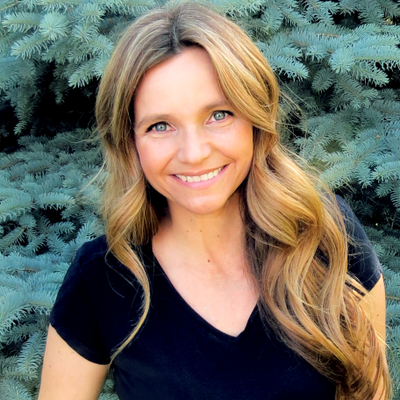
Sasha Greene

She is a writer and computer programmer who lives in Glasgow, and struggles to stop the books in her house from multiplying mysteriously and overflowing on the bookshelves. (I think many of us can relate to that). Sasha is also an adaptive snowboard instructor, in which she passes on her love of mountains and racing down a hill to people with physical and mental challenges.

I asked Sasha about her debut novel, Something like Happy, and being an author.

Please note that some of the content in this post talks about mental health and suicide.

Tell us what inspired you to write Something Like Happy? 

I’ve always wanted to set a book in Glasgow, because it’s such an amazing city and it tends to get passed over in favour of more glamorous locations. I also really wanted to write a book which touched on the theme of mental health in a positive way, because there is still so much stigma regarding the topic, especially around suicide. There are so many people who seem to be fine at first glance but are actually really struggling with their mental health on a daily basis. All these people inspired me to create my characters, Jade and Nick, who are just doing their best to navigate their way through the issues they’re facing. 

When did you start writing seriously? 

When I was a child, I was very serious about my writing. I wrote fairy tales about witches and talking houses and illustrated them too. I still have copies of them somewhere. I think I was about 15 when I tried to write a historical crime romance story. It wasn’t very good (I know, because I still have a copy of it!) and I think I got a bit disheartened and gave up on writing. I didn’t start writing seriously again until about eight years ago, when I found a course run by Kate Walker on writing romance. She encouraged me to apply to the Romantic Novelists’ Association New Writers’ Scheme, and the rest is history. 

What do you love most about being an author?

There are so many things it’s hard to pick! Seeing my book and being able to physically turn the pages was so exciting. Getting my first five-star review was exhilarating. But I think the most amazing experience was when someone told me that they had given the book to a friend who never reads books and they loved it and now they want to read more. Knowing that I’ve helped someone to find a joy in reading is something I really treasure.

What are you working on now?

I’m writing a follow-up to Something Like Happy, where one of the supporting characters gets his own story. It’s about two people who have both been through traumatic experiences and need to figure out if they can trust each other. PTSD is quite a challenging topic to write about, so it’s taking a lot of work and research but I’m really excited by how it’s all finally starting to come together. It’s going to be another great story.

What do you hope readers will take away from Something Like Happy?

I really like the title of the book because it’s a good reminder that life will not always be happy, but as long as it’s something like happy, then that’s enough. Most of all, it’s just a good story that I hope people will love reading, but if it also gets people talking about mental health then that would be great. I went through a period where I had some serious issues with my mental health, and reading positive stories was what kept me going. Everyone deserves a happy ending.

You can follow Sasha on her website and on Twitter.

More about the book:

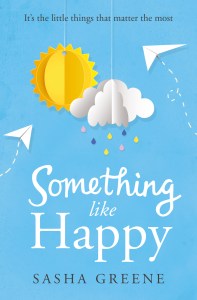
something_like_happy_cover-SG

Something Like Happy is an emotional and thought-provoking novel about friendship, love and day-to-day struggles with mental health. Jade is just trying to get by. She doesn’t want to talk about it. She doesn’t want a fuss. But one day she meets Nick and everything changes.

Out of the most difficult of situations, Nick and Jade’s friendship grows into something neither never knew they needed. Jade used to be sure that she was better off alone. But could it be that together, with Nick by her side, she can start to feel something like happy again?

Where can you get it?

Amazon UK | Amazon AU | Kobo | Waterstones | WHSmith | Booktopia | Dymocks | Angus & Robertson


Catching my breath

I am making time this afternoon to write a post, which I have (as you can see above) entitled ‘Catching my breath’. It’s a ‘fake it ’til you make it’ type strategy as I am professionally breathless.

I am still working fulltime and getting up every day to put in an hour or two of writing/editing/author biz before work. But soon I will be paring back to .9 (woo hoo), giving me every other Friday off to write like a little writing fiend.

When asked about my WIP (work in progress) I currently respond with, ‘which one?’ ’cause there is a little bit going on in my author world.

Status update:

  • My travel romcom series recently got a name: The Holiday Romance series
  • My third book got a name – not officially shouted out on social media yet, but it will be A Sunset in Sydney
  • The same cover artist who created the covers for Books 1 and 2 is – as you read this – creating a gorgeous depiction of Sydney (squee)
  • In January, I finished the first draft of my Christmas novel (coming in October), called The Christmas Swap
  • I am completing structural edits for A Sunset in Sydney right now (well, not right right now, as I am writing this post)
  • When structural edits are handed over, I go back to a re-write of The Christmas Swap which is due at the end of March
  • Once that’s handed over, I will get copy edits back for A Sunset in Sydney
  • In the midst of all this, I am working on the launch of Book 2, That Night in Paris (April 15 – pre-order now!)
  • In June, I go to the UK to attend the HarperCollins author party, the RNA Conference, and to meet my editor and agent in the personage
  • While in the UK, I will go up to Edinburgh for research, as it is the setting for the second half of my 5th book, the 4th book in The Holiday Romance series, which is about a supporting character from Book 2 (did you get all that?)
  • Also while in the UK, A Sunset in Sydney will be published, so lots to do in the lead up to that!
  • And once back from that trip, in early August, I will be finishing Book 5 and will receive structural edits for The Christmas Swap

Actual picture of me when I’m killing it:

pop-art-multitasking-busy-business-woman-at-office-vector-11222980

And sometimes me:

exhausted

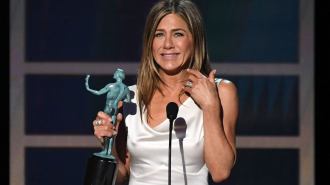
But also me:

Jennifer-Aniston-gets-excited-after-winning-her-first-SAG-award

I really, really, really, love being an author and I am still pinching myself.


NoNo NaNo, WhyNo FOMO?

NSW Oct 2019

Next month is National Novel Writing Month, or as it’s called in the (writing) biz, NaNoWriMo, or NaNo for short. Yes, I know it sounds like something Mork would chant right after he called Orson, but NaNo is serious.

The goal is to write (at least) 50,000 words of your WIP (work-in-progress) in the month of November, an average of 1666.66 words a day, give or take a decimal point.

I did my first (and only) NaNo in 2018 while we lived in Porto during our sabbatical. I had written 30,000 words of my (then) WIP, and I set myself the goal of finishing the manuscript during NaNo. As we were on sabbatical and I didn’t have any contract work in November, I could dedicate myself to full-time writing. I smashed it. 75,000 words in three weeks.

I had an online support group — NaNo encourages community — and a group of young Portuguese writers who I got together with once.

Only once, because the in-person group weren’t really working towards getting published. One of the gals I met was doing her 12th NaNo. She looked so young , I jokingly asked her if she’d done her first one when she was ten years old. No, she’d been eleven. She’d written eleven manuscripts eleven years and none had seen the light of day since. The others in the group were the same — for them, NaNo was about the community, putting pen to paper, or fingers to keys, and letting the stream of consciousness flow.

For me, NaNo was about writing a novel I could get published. (The novel I finished last November, That Night in Paris, is being published in March by One More Chapter, an imprint of HarperCollins. Watch this space — literally.) I gave these young writers online support for the rest of the month, but as we had very different goals, they weren’t really my writing tribe.

Flash forward to July this year. July is ‘Camp NaNo’ with the more achievable goal of 30,000 words in 31 days. I had an idea for a Christmas book and got 35 000 words in. The biggest difference between NaNo 2018 and Camp NaNo 2019 was that this year, I have a full-time job. I was happy with my Camp NaNo word count, and the manuscript — another ‘watch this space’ for Christmas 2020.

The intensive NaNo approach seems to work for me, so surely I am doing NaNo 2019?

No. NoNo NaNo for me this year.

And, as soon as I made that decision, I felt like I could breathe again.

Because, I’ve got enough to get on with in the next few months. Finalising edits for That Night in Paris, then handing over structural edits for the third book in my travel romcom series, then finishing my Christmas book.

I am already at capacity, and I already have the motivation I need to get the work done.

So this year, I will be championing my writer friends from the sidelines. You got this. You’re amazing. Practice self-care. And write, write, write.

The author’s juggling act

The past 6 months of ‘authorhood’ has seen me juggling quite a few projects and responsibilities. I am not complaining—it has been an incredible ride—but I tend to re-prioritise (nearly) daily.

In March, after job-hunting for a couple of months, I was notified that I’d landed a fulltime job at the company I’d worked for prior to my sabbatical. I was concurrently signing with HarperCollins. Timing wise, I would have about a month before I started fulltime work and received my structural edits for my debut novel.

I got to work, starting Book 4 in my travel romcom series, about a character called Jaelee (who you will meet in Book 2) taking herself off to Bali on sabbatical. In a month, I got 50000 words in.

Then I started my new job and received my structural edits, so Book 4 was left in the drawer. Once my edits went back to the publisher, I started on the marketing for my debut. With my agent and publisher, we teed up early readers and a book blog tour, and I shouted out about pre-orders. I built my online presence even more.

My debut launched at the end of June.

In July, I participated in Camp NaNoWriMo, tasking myself with writing as much as possible of a stand-alone Christmas novella, an idea that had arrived overnight in late June. I wrote 35000 words of the novella in July—while working fulltime and marketing my debut.

In August, I sent my half-finished novella to my agent, who loved it and had feedback. I tweaked it, and the manuscript, along with a lengthy synopsis of ‘what happens next’, went off to my Editor. I can’t say too much about this at the moment, but watch this space (hint, hint, it’s good news).

September came and I learned the publication date for Book 2 was being bumped up three months. EDITING TIME!!! The book was written, but I hadn’t touched it since January, so I gave it a comprehensive structural edit—particularly important as when I wrote it, it was 3rd in the series and now it will be 2nd, so some chronology to fix.

I sent the edits off in September and went back to Book 3 (which I wrote 2nd), conducting a similar structural edit to tighten up the writing and fix the chronology. I am about 70% through that edit, but I’ve just received edits for Book 2 back from my Editor, so I am switching gears again.

When Book 2 edits have been handed back, I can wrap up my edits of Book 3, which I will aim to have done by the end of the month.

But, back to the Christmas book or Book 4 in the series, both unfinished? I really want to do NaNoWriMo next month, with the lofty goal of 50000 in 30 days. BUT, the last time I did it (75000 words in 3 weeks!) I wasn’t working fulltime. Writing was my only job. And marketing for book 2 will start soon…

Mostly, the juggling feels like this:

juggling-exercise-brain-1

But sometimes, it’s like this:

juggling-work1

And occasionally, like this:

20141005-095659

But on the whole, I love this ‘being an author’ gig.