A Grand Adventure: Sabbatical Life

Those of you who followed our sabbatical journey will know that we spent most of 2018 living (and often working) abroad. I blogged throughout the year, with posts specifically about the sabbatical at the half-way mark, and then again on the home stretch.

We’ve been back in Australia about six weeks now, and have just moved into our new home in Docklands. As I interview for fulltime work, as I’m about to sign a publishing contract for my first book, and as I unpack and find new homes for our belongings, it’s a good time to reflect on our year of sabbatical life.

The days are long and the weeks go by fast

A dear friend we made in Bali, where we lived for two months, reflected that when she looked back, the weeks seemed to be flying by, but that each day felt full and long.

I can honestly say that this is how I felt for most of the year.

When I am present, when I live the breadth and depth of each day, they seem longer, fuller. I want to carry that feeling with me, to bottle that secret sauce, because it makes life feel more purposeful and I’m more content.

A sense of accomplishment

As well as consulting for clients (writing, editing, and review educational materials), I wrote and edited two books. TWO WHOLE BOOKS, each 100,000 words. I wrote 200,000 words – funny, heartfelt narratives set in beautiful locations. I made up people, their lives and their adventures. I created from nothing the things they said and did – well, I borrowed some anecdotes from loved ones, but for the most part, those fictional people came to life in my head.

I worked on building my author platform, engaging with readers and authors from around the world, learning from them, supporting them, befriending them. I’ve made some wonderful literary friends over the past year – people I can contact with questions and requests, people who can rely on me for support and help if they need it. I will champion them and their writing, and they will do the same for me.

I also queried publishers and agents, honing my messaging about me and my books. I am proud and excited to say that I recently got a big fat YES from a UK-based publisher, which I will announce officially once I’ve signed the contract. Because of this sabbatical, my first book is being traditionally published and I will get to hold my book in my hands. The others will hopefully follow (squee!).

Feeding my soul

We lived in and visited some beautiful, exciting, and vibrant places. Bali, Portugal, Scotland, Ireland, rural Minnesota, London, the British Midlands, Amsterdam, Seattle, LA, Wales, New Zealand and my home state of Western Australia. Natural beauty, architectural wonders, history, and wildlife in copious doses. Our everyday life was a wonderful cacophony of sights, sounds, smells and tastes that we happily steeped ourselves in.

Walking the streets of Ubud, the sun beating down, the humidity hanging heavy in the air, the heady scent of tropical flowers mixing with petrol fumes and Indonesian spices – this became my idea of heaven.

Spending time with loved ones also fed my soul. Catching up with family and friends in WA, LA, Seattle, Minnesota, the UK, Ireland, and Amsterdam was a highlight. Living with Ben’s family and mine for extended periods of time was something special. Cooking a mid-week meal for people I love is – and has long been – a great pleasure for me. Chatting over that meal, as we recount our days, our mini-triumphs and challenges, heightens that joy.

‘Quality time’ it’s called. We all need that type of time with our loved ones. Even though I’ve lived my adult life ‘away’ from most of my family, I long for those times when I can look across the dinner table and meet the eyes of someone I love dearly but don’t see in person very often. The thing about being a traveller, someone who lives ‘away’ – you always miss someone. It’s the curse of the ex-pat. I had a year of topping up my soul with quality loved-ones time.

And, wonderfully, we made some very dear new friends from across the world.

 
The things you miss

Things are just things, really. We attach meaning to them. As I unpack boxes and find places for our things in our new home, I know (deep down) they’re just things, but they make me feel at home. Books I’ve loved, souvenirs and artefacts from our travels, family photos, my good knives, my cannisters (yes, really) – these things ‘spark joy’ as Marie Kondo would say. It’s nice to rediscover these things. Do I need them? No, I don’t. I spent the year with my clothes, toiletries and a stack of rectangles (laptop, iPad, Kindle, phone). I can live without things. For now, though, I will especially enjoy them.

I did really missed drawers, though. Like, really, totally, absolutely, completely missed putting my clothes into drawers. Even when we stayed somewhere for weeks or months, we kept our clothes in our packing cubes. Drawers are luxurious. Next time you take an article of clothing out of a drawer, just savour that feeling.

The things you get used to

In Bali, we slathered ourselves in sunscreen and showered several times a day. It was hot and humid and 80% of our time was spent outdoors. My hair looked like wool. And even so, Bali was my favourite place we lived in. I’d live there again in a heartbeat.

I am a creative home cook. In Bali, I cooked with tempeh for the first time and it became a staple. At the lake cabin in Minnesota, I had an electric frying pan and a microwave – that’s it – and I cooked a variety of dishes. In Portugal, it was difficult to get good fresh food – produce, dairy and proteins – but I adapted. In the UK (before and after Portugal), I was cooking for five instead of two, and three of the adults were eating Keto. Spoiled for fresh produce, because you are in the UK, I made giant pots of Keto-friendly stews, red sauces and soups.

I can write anywhere – and did. A sunlounger, a beach, a cafe (many cafes), the kitchen table (in many different kitchens), on planes and trains, and even on a boat. The world was my writing room. I loved it.

My big takeaways

I love Australia. It’s home – Melbourne especially. It’s a terrific city and we have loved ones here. I was happy to come back and I am excited to start the next chapter here.

IMG_20190215_215006
Our new view

I would do a sabbatical year again – or create a life where we live abroad for several months every year. There was a time when that thought terrified me – now I think it will become essential to us.

Ben is an incredibly brave, wonderful, supportive, imaginative person. “Why don’t we trade a year of retirement for now,” he said a couple of years ago. I am so grateful he did, but even more so that he gently nudged me to make the commitment. He is my bestie, my partner-in-crime, my travel buddy, my champion, my love. Thank you, Ben, for being all those things and more.

Romance Must-reads

I was a romance reader long before I was a romance writer – actually, since I used to sneak Mills and Boon books from my mother’s beside table at the precocious age of 12.

By 13, I’d graduated to Shirley Conran and Jackie Collins, and she’d ‘graduated’ to just handing them to me.

At high school, I read every Sweet Dreams book ever written along with all the other teenage girls in existence. As an adult, I discovered chicklit – mostly romcoms, but also the more heartfelt side of the genre.

And when I read my first Lindsey Kelk book in January 2013, I knew two things. First, I wanted to read all her books (there were 5 then; there are soon to be 13). And second, I wanted to write romance novels.

I still read widely across the genre and wanted to share some (old and new) favourites with you.

AAG - LKThe first in the Tess Brookes series (my fave chicklit series ever) – this book is hilarious.  Buy it here. Kelk’s book that started my love affair with romance writing is I Heart New York, and you can now pre-order the 8th ‘I Heart’ book, I Heart Hawaii.

Outlander

Outlander is, simply, one of the most beautifully-written books I’ve ever read; the prose is sublime. Couple that with a love story that transcends time, it is an absolute must-read. And if you’ve been living under a kilt, there’s also a television show – perhaps the sexiest one on air. I am up to #7 of Diana Gabaldon’s series.

Penny Reid

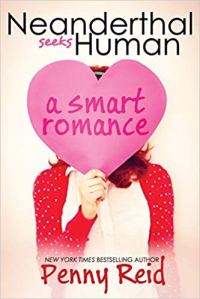
Penny Reid’s Knitting in the City series is terrific, and I devoured book 1, Neanderthal Seeks Human. I am only 3 books in (there are 8, each focussing on a different member of the knitting circle), but the way she crafts distinct characters through first person is just terrific.

Mayes

How I adore Frances Mayes’ writing. She evokes place like no other. Women in Sunlight is not your typical romance novel, as it’s not the primary theme, but I love the approach in this novel which explores love, sex and romance in your 60s.

TTTW

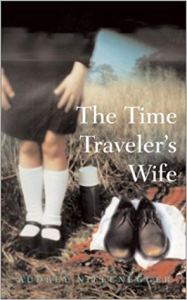
The Time Traveller’s Wife is one of my favourite books – ever. This story will simply take your breath away.

Moyes

The 3rd in the trilogy, this was actually my favourite of the moving, yet hopeful ‘Me Before You’ series. An original concept brings Louisa and Will together in a the most devastating ‘meet cute’ ever. Buy the first one here.

Allende

Traversing generations, Allende has woven a beautiful and epic love story in The Japanese Lover.

Some other lovely romantic reads I’ve loved over the past few months are: Her Brooding Scottish Heir (my first foray into M&B in decades) by Ella Hayes; French Kissing (sexy, funny, dreamy) by Lynne Selby; A Room at the Manor (heartfelt and lovely) by Julie Shackman; A Village Affair (laugh out loud) by Julie Houston; One Way Ticket to Paris (rekindling true love) by Emma Robinson, and Lottie Loser (romance with a dramatic twist) by Dana L. Brown.

I’m making myself stop there and if you think that’s a lot of books, you should see my TBR (to be read) list!

Happy Valentine’s Day or Galentine’s Day or just plain old February 14th.

Sandy xx


So, what exactly is #chicklit?

I published my first novel nearly a year ago and I’m about to publish my third. Something I’m often asked—and something I need to define as an author—is what genre I write in.

The long answer is ‘Contemporary Women’s Fiction’, but as this broad category also includes authors like Liane Moriarty and Jodi Picoult, whose books are brilliant but very different from mine, I tend to answer ‘RomCom’ or ‘Chicklit’.

RomCom is a little limiting, however, because in each of my books I delve into heartbreak, goodbyes, loss, and other harsh realities of life, like alcoholism and infidelity. The other day, Ben asked me if I was okay because I started sobbing while sitting at my computer. “I’m just writing a sad scene,” I said and he left me to it. My characters live and breathe in my head; when they’re heartbroken, so am I.

That said, I also write a lot of humour into my books. The main characters are funny women. They’re self-deprecating, smart and witty. Their inner monologues, where they ‘say’ whatever they like, are some of the funniest parts of the books.

In short, I write them to be relatable, well-rounded, flawed, and fabulous women—like your best friends, your sisters, your cousins/aunts/mums, like you.

So, is Chicklit a more apt description of the genre I write? Yes and no.

Yes, because fans of the genre know what type of book they’re getting when they buy one of mine—and it’s likely they’ll enjoy it. And I’m in good company in this genre. Take a look at the Goodreads list of most popular Chick Lit titles. You’ll notice some famous bestsellers, like Bridget Jones’s Diary and The Devil Wears Prada.

And no, because it’s (become) a loaded term. For those who don’t really know what it is, who are afraid to dip their toe in the pool, who might love my books and others that sit in this category if they actually read them, there can be the perception that Chicklit = fluffy nonsense.

This is not true.

Sure, like in any genre, books in this category span the entire spectrum from outstanding to atrocious, but the best examples of the genre are fantastic reads. And, like any genre, the lines are fluid. It includes everything from laugh-out-loud comedies (a la Bridget Jones) to heartbreaking tales like JoJo Moyes’ Me Before You.

A way I can narrow down my specific corner of the genre further, is to identify the books that would sit next to mine on the shelf, those ‘people-who-bought-this-book-also-bought…’ books.

My fave Chicklit author—the one who I want my books to sit next to the most—is Lindsey Kelk.

lindsey-kelk-2-book-bestsellers-collection-about-a-girl-i-heart-new-york

She’s written seven (soon to be eight) I Heart books and three Tess Brookes books, as well as several stand-alones. Her writing is fast-paced, funny, heartfelt, and relatable. She’s a full-time author and her books are sold worldwide, and I feel qualified to say this because I’ve read hundreds of Chicklit books, one of the best in the biz.

So, if I was pressed to give the Twitter pitch definition of Chicklit, I would say this:

It’s fiction about women, for women.

That would leave me 204 characters to further explain that men often read and enjoy it, and some of it is written by men, but I stand by my one-liner.

I am also trying (without a lot of traction at the moment) to get ‘travel romance’ to take off as a sub-genre: exploring the transformative effects of travel on the love-weary. But until it becomes mainstream, I’m happy to inhabit my little corner of Chicklit.


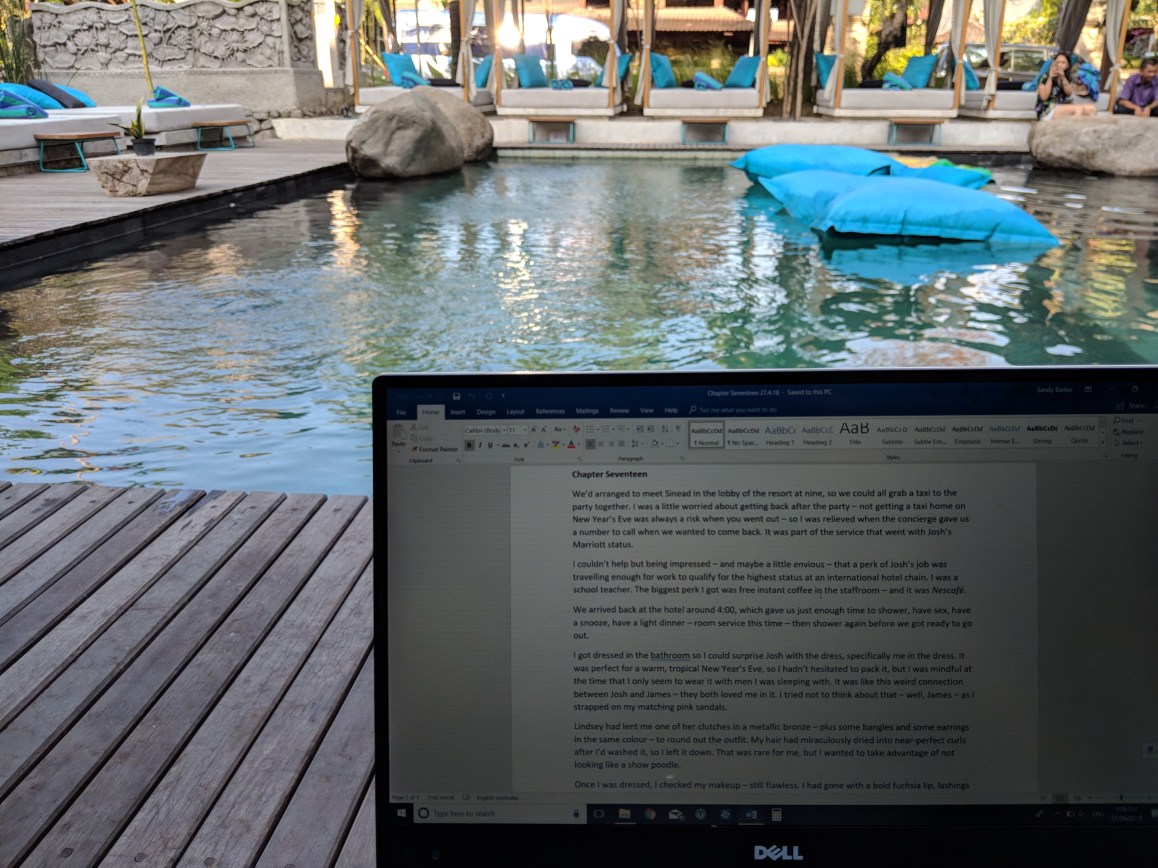
A desk with a view

We have now been on sabbatical for nine months, and during that time Ben and I have both worked for our respective clients and I’ve written, edited and published one novel and I’m about 1/4 of the way through writing the next.

While we’ve also made time to explore the different locations we’ve visited or lived in, our working life is a big part of the sabbatical. This is a test case: can we live and work abroad for extended periods of time? We never know, this could become our new normal.

The kind of work we both do – Ben developing software, and me writing and editing content – means we need to work at desks. But ‘desk’ can be any flat surface. Ben’s current stand-up desk set up is an ironing board and the box the vacuum cleaner came in – yes, really.

Most of the time, we either use the dining table of the place we’re staying at, or we go to coffee shops. The coffee shop thing is tricky. The seats have to comfortable enough to sit on for at least a couple of hours, the WiFi has to be good, the coffee can’t suck, and there needs to be a generally good ‘vibe’.

Our fave spot so far in Porto is the cafe at the Concert Hall, which has great seats, fast WiFi and a buzz of energy from the groups of people who gather there to catch up or to work. The coffee sucks, but 3 out of 4 isn’t bad. The other day, when it was still sunny and warm, we worked in the park at a picnic table for a couple of hours – divine.

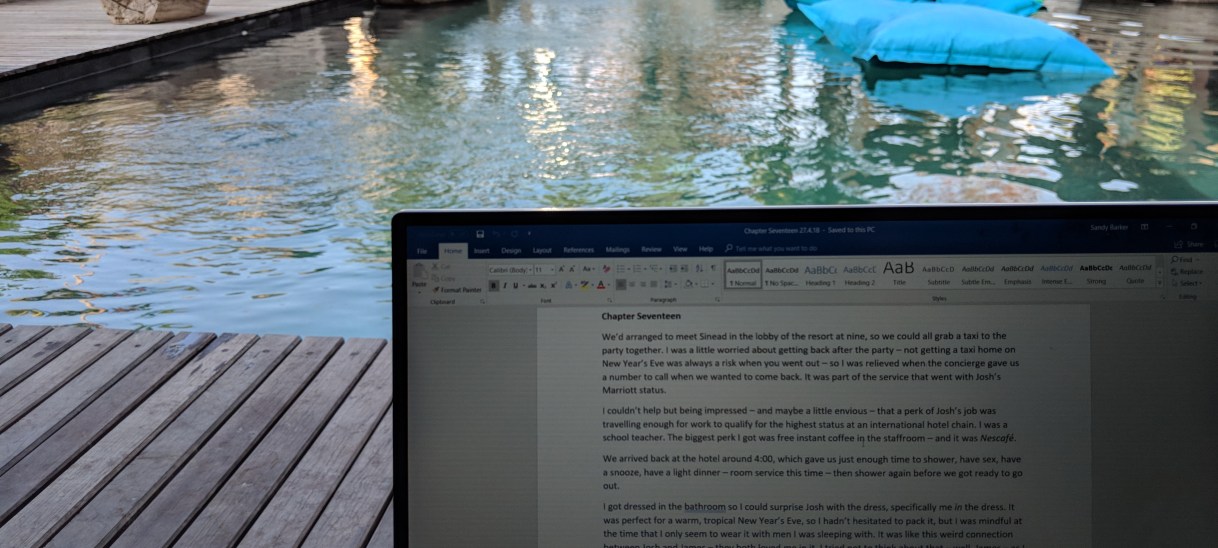
At the lake cabin, I’d often sit on the porch in an Adirondack chair (I love these) and write, stealing glances at the lake view from time to time. In Bali, my favourite place to work was on the sunlounger next to the pool.

So here are some of my fave desks with a view from the year so far.

In the park in Porto
At the park in Porto
Looking out the window in Amsterdam
Amsterdam


Drama Queen: Becoming a Novelist

Since I can remember, I’ve loved writing. I still have my Year 4 composition book and I was quite the short storyist (I also like to make up words). In my teens I wrote a gripping satirical piece on public toilets and started a novel (to date, still unfinished).

At university, while studying a BA in English and majoring in Literature and Theatre Arts, I wrote piercing exposes about sexism in classic novels and the sexualisation of men in Glam Rock – I know, also gripping stuff. I wrote angst-ridden monologues, which were somewhat sophomoric considering I was in my early twenties and no longer a sulking teen.

I kept a journal from age twelve, one of those small, but fat diaries with a gold lock that my eight year-old sister could easily pick. I upgraded to bigger and better journals, but stopped journalling about fifteen years ago when I realised I spent more time writing about my life than living it.

All of these writings and musings are where I cut my teeth as an author, but the one thing that has served me best as an author is Drama – my time studying performance and plays, my time on stage, and my time as a Drama teacher.

Drama taught me invaluable lessons I draw on every time I write.

Character motivations

Characters must have a motivation. It’s that simple. They must want something, even if they don’t (yet) know that they want it. Characters can also be their own antagonist – just think of how many people you know who self-sabotage. Any time my writing stalls, I ask myself, what does this character want and what will they do to get it?

Character arcs

Not only do characters need a motivation, they must move – and I don’t mean that they need to join a dance class or change their address. Characters – particularly the protagonist – must develop, grow, or change in some way. They must have an arc. They should be different at the end of the story from when the reader first meets them. It’s good for me as a writer to be able to articulate that continuum of growth, that arc.

Back stories

Acting taught me of the importance of back stories. Characters – again, particularly protagonists – need to be as fully fleshed out as possible. They should have histories and there should be reasons for their personality traits, their motivations, their flaws, their relationships. As a writer, I must create histories for my characters, so they ring true to readers.

Setting

In a play, there’s a great deal of attention to setting – how characters interact with it, how it’s referred to and how it is staged. On paper, a richly-developed setting can become almost a character in itself. And how characters engage with the setting can evoke a specific tone or mood. As I travel avidly, I tend to write about places I know well and aim to capture what it is like to be in those places.

Dialogue

I have received some terrific feedback on the realism of my dialogue, which I greatly appreciate because I tend to use a lot of it and I work hard to make it sound A) true to each character and B) natural and realistic.

Writing plays in the noughties helped me develop this skill. I was teaching at a girls’ school and was seeking out plays for student productions. There’s a dearth of well-written, easy-to-stage ensemble pieces which are appropriate for high school students – especially for an all-female cast. So, I wrote plays. (They have since been published on Drama Notebook in the US and have been performed by schools in Australia, the UK and the US.)

I also hone this skill every time I work on one of my novels. Once I finish a conversation, I read it aloud as the characters (with voices – I can’t help myself), and tweak the phrasing, words, tone and inflections. My aim is to make it seem like a real conversation that I happened to capture in print.

Scenes

I follow a lot of authors on social media through Twitter, Facebook, blogs and websites, and I’ve been pleased to see more and more discussions about writing in scenes. Rather than focussing on chapters, the author focuses on a scene where something specific happens – just like in a play. A scene could comprise a whole chapter, or it might be part of one.

I realised recently that as a novelist I always write in scenes – again, perhaps a throw-back to writing plays. It is easier for me to approach the over-arching story in smaller, self-contained chunks. As a reader, I’ve seen a shift in writing towards this format. Likely you’ve seen this too – authors denote the end of a scene within a chapter with a double space or a physical page break that looks something like this:

***

Where I used to have to finish reading a whole chapter before putting a book down, I can now get to the end of a scene and feel like I have a natural place to pause.

A quick nod to grammar

I mentioned that I studied Literature as well as Theatre Arts and it was through my Lit classes that I began my love affair all things grammar. I have since taught English and worked as a professional editor. It means I can conduct decent and thorough editorial passes at my own writing before handing off to a(nother) pro (always get another pair of eyes on a manuscript).

And a quick nod to my contemporaries

A good writer reads. A good writer reads widely. A good writer reads voraciously.

Reading teaches you what to do and what not to do – how to evoke time, place, passion, fear, love, loss and the human condition – how to avoid over-using a word – how to structure a phrase, a sentence, a chapter, a thought – how to make your readers laugh aloud and weep onto the page – how to play with words and ignore the rules for effect.

I want to be a good writer – sorry, make that a great writer – so I read. Every day. Across genres. Indie authors, emerging authors, well established authors, and sometimes super famous authors.


Mid-way through our mid-career sabbatical


MVIMG_20180526_102249.jpg
Last day in Seattle

At the end of 2017, I posted about our 2018 sabbatical. Ben and I embarked at the beginning of February, so last week marked the mid-point of our year of living abroad. In that time, we have visited friends and family, explored new locations, lived life like a local and have worked remotely.

Here are some of my reflections and lessons learned from the mid-point of our sabbatical.

img_20180717_142838
Exploring northern MN with the Doctor

Home (really is) is a state of mind

Just before we left the US to begin our UK/EU stint, I fell very ill and had to spend a night in hospital. After 40 hours in a hospital gown, my vitals being checked every two hours, and being tethered to an IV stand, all I wanted to do was go home. At that stage in our travels, home was Ben’s grandmother’s house, and when I arrived back there – still, weak, tired, and yet to fully recover – I was ecstatic. I was home.

Home has been various places in our travels. With my bed count for the year sitting at 27 (Ben’s is 26, because he hasn’t sleep in a hospital bed), home really has become a state of mind. That’s not to say that all of those beds felt like home; it means that when we have taken side trips for a few days and returned to our longer-term accommodation, I have had an overwhelming sense of returning home – and that feeling is marvelous.

So, at our mid-way point I continue to subscribe to the ‘wherever I lay my head’ philosophy I posted about here.

mvimg_20180807_175615
Chicago with our dear friend from Bali days, Kelley

It’s possible to get a lot done while you’re travelling

When we meet new people or catch up with family and friends, we invariably end up discussing the ins and outs of sabbatical life. The most frequent clarification during these conversations is that taking a sabbatical is not ‘being on holiday’ for a year.

Ben and I both have our own companies in Australia and consult for clients – Ben in an ongoing capacity and me on project-based work. There have been many weeks where we’ve worked full-time, or close to it. This type of work suits us both, as we can carve out the time to do it around our larger plans, we can take advantage of coffee-shop WiFi, we both enjoy working in a variety of environments, and – to be frank – it helps fund this year abroad.

Additionally, since we left Melbourne, I have written and published my second novel. And I am soon to start my third! I love writing, I love writing novels, and I love writing ‘on the road’. Plus, each new location, each new friend, each conversation with a loved one, each excursion and adventure could be the kernel of an idea for book #4 – and the ones after that.

img_20180809_200447
Meeting my favourite author, Lindsey Kelk (Birmingham, UK)

Things are just…things

When we left Bali in May, we left behind many of the things we’d bought to make Bali life a little easier – storage containers, coat hangers, food staples, Costco-sized toiletries. We did the same thing when we left Minnesota, with the addition of some red wine glasses, a life-time supply of sunflower seeds we barely made a dent in, and a yoga mat. We also filled a large bag with summer clothes which we dropped into a charity donation bin. Clothes I previously had ‘loved’ were tossed aside without any remorse.

It’s just stuff – and we’re travelling light.

00100dPORTRAIT_00100_BURST20180813125611947_COVER
With my nephew, Alexander (UK)

It’s going fast

I truly cannot believe we’re half-way. Since leaving Melbourne, we’ve been to New Zealand, two other states in Australia, Bali, three states in the US, and the UK. Next week, we’re off to Ireland and we are starting to firm up our plans for Scotland, Amsterdam, Paris and Portugal.

I know that before we know it, we will be on our way back to Melbourne for Australia Day 2019 (January 26). That date is important, because Ben will be attending a citizenship ceremony to become a fully-fledged, dinky-di Aussie (I am so proud).

The speed with which this year away is rocketing by, means that we must continue to seek out and enjoy the small pleasures. We must continue to take every opportunity to explore, live like a local, see people who are dear to us, meet new friends, and accomplish great things.

Because, ultimately, that’s what this year is about – living life to the fullest.

IMG_20180331_165018
Secret Beach Day Trip (Bali)


Book giveaway!

Hello everyone!

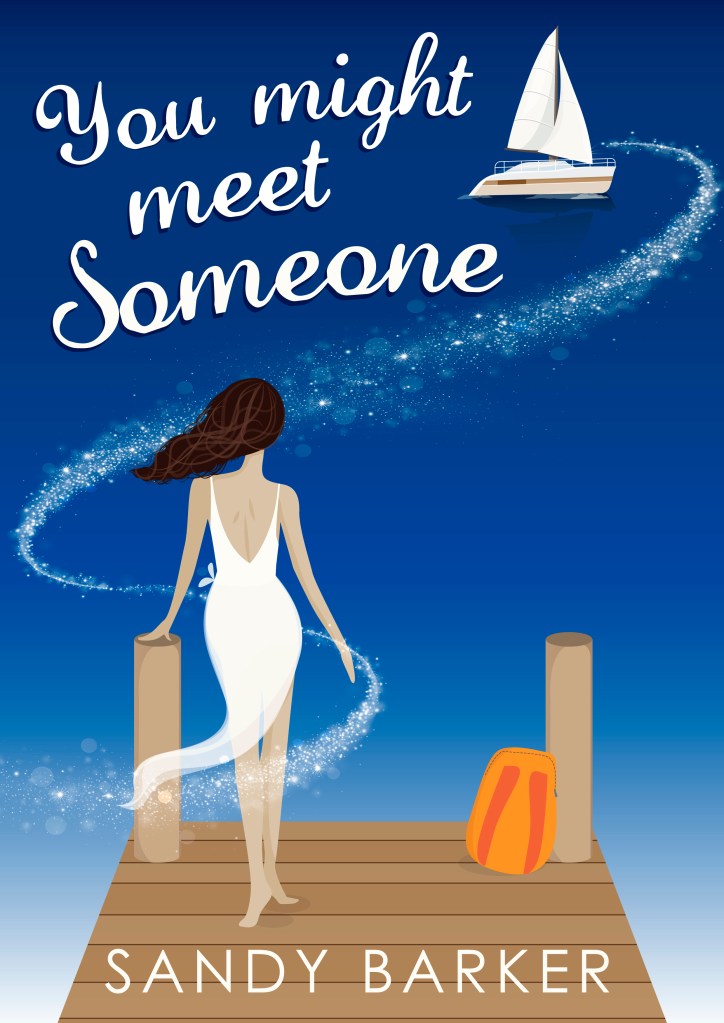
To celebrate the release of my second book in the ‘Someone’ series, I Think I Met Someone, I am giving away book one, You Might Meet Someone, for FREE on Amazon (Kindle) in all regions until Wednesday July 25. Yes, free!!!

Here’s a snapshot – it’s a romcom with a travel theme: Sarah’s taking herself on holiday – not looking for love, but for herself. Join her for a heartfelt, fun and romantic romp in the Greek Islands.

Download your FREE copy before Wednesday! Links below.

You Might Meet Someone Cover Art DIGITAL

Amazon US | Amazon UK | Amazon Australia

Also available in all other geographies.

How to write a sequel

Maker:L,Date:2017-9-28,Ver:5,Lens:Kan03,Act:Kan02,E-Y

I originally posted this while writing the follow up to One Summer in Santorini. It is 14 months on, and I have edited this post accordingly.

I begin this post by planting my tongue firmly in my cheek. I would love to say that I’ve unlocked the secret, that I’ve discovered the Holy Grail of writing, that I’ve figured it out! In truth, I have discovered a kind of secret sauce for myself. Other writers may benefit from my ‘process’, so if anything I say resonates, have it – it’s yours.

Reflect on book one

I wrote book one, One Summer in Santorini, for several reasons:

  • My previous agent told me that the book I was writing at the time was my 5th book, not my 1st – too many characters and a multi-narrative. “You’re not Liane Moriarty,” he said. “Yet,” he added. He then challenged me to write a simple, linear narrative. Which I did.
  • It was a love letter to my partner, Ben. We met in Greece and I borrowed (rather heavily) from our story for the book  – the first half anyway. When I introduced a love triangle I was well into the realm of fiction.
  • It was a love letter to Greece. Greece is a place where you go to fall back in love with yourself – and with being alive. It challenges you to participate in your own life. If you haven’t been, go.
  • I had some demons to exorcise. I was single for half my twenties and most of my thirties. And by ‘single’ I mean I dated awful men who I changed or hid myself to be with. I wanted to write about a woman who calls an end to that, who won’t compromise herself again to be with someone.

Make time

I wrote book one on weekends and on evenings after working at a full-time job where I spent the bulk of my time writing. It was often hard to come home (usually post gym or errands) and sit down and write for myself. I did it, but it took a couple of years.

For the sequel, I had time. In 2018, we were on a year-long sabbatical. I had contract work, but I could dedicate significant chunks of time to writing. I started writing the sequel in February while we were still in Australia and I hit 10,000 words. I was reasonably happy with that progress, but my goal in Bali was to up the pace. After 8 weeks there, I finished the book at about 95000 words.

Celebrate the milestones

Every writer gets to decide what each milestone is. I celebrated when I got through an emotional part (if the writing left me sobbing or laughing out loud – milestone!), or I finished a chapter. The sequel is written in parts – and finishing each one was a milestone. Celebrating, by the way, included sharing on social media, pedicures, cocktails, massages, and congratulatory hugs from Ben.

The secret sauce

With book one, I had to knuckle down. I had to carve out time, and often had to force myself to sit down and write or edit or proofread. I had to self-impose deadlines and get others to hold me to account.

Being in Bali, with the luxury of time, the portability of a laptop, and being inspired by my surroundings, I had an absolute ball writing the sequel. And I worked faster, which meant there was continuity in the writing – the style, the voice, the narrative, character development. I had to work laboriously at that in the editing process of One Summer in Santorini, because I wrote it over such a long period of time. With the sequel, I’ve made the editing process easier on myself, just by writing over such a concentrated amount of time.

Most importantly, though, I let the story come to me.

This is the hardest part to explain, and is still my process. I start with only a rough outline, and I have no idea how many chapters it will take to tell the story. For the sequel, I didn’t even know how it ended when I started writing it.

When I got stuck, or I didn’t know what would come, I stepped away – sometimes for a few hours, sometimes days, and when I was doing something else – running, cooking, dodging scooters on the road – it came, the next part of the story. Then I would sit and write.

I’m so grateful that we made this decision to pack up our lives, sell up our stuff, leave our jobs and to live around the world. It was my special not-so-secret-anymore sauce.

While on sabbatical, I also wrote another follow up to One Summer in Santorini about Sarah’s sister, Cat. This book will be out early next year with the sequel to follow.

I Think I Met Someone (Book 2 in the ‘Someone’ Series)

The sequel to You Might Meet Someone picks up Sarah’s story a few months after her Greek adventure.

Here’s the preface…

“Have a great time!” my best friend, Lindsey, called as she climbed into the driver’s seat of her car.

“I hope he shows up,” said her husband, Chris, grinning at me through the passenger window. Chris always teased me. He was the brother I always knew I never wanted.

“Ha, ha. You’re hilarious.”

Lins leaned across Chris, swatting at him as though he were a naughty fly. “Ignore my horrendous husband.” Chris grinned at me. “He’ll be there. And you’ll have a ball.”

I nodded, clinging to her words of encouragement. I needed them.

“We love you,” she said with a smile. Chris winked at me.

“Love you back,” I said as I waved goodbye. The car pulled away from the curb and I took a moment to catch my breath.

To be honest, I was only mildly terrified that he wouldn’t show up, and that I’d be sitting in a hotel room half-way across the world by myself. Self-doubt can be such a buzz-kill, especially when you’re about to fly somewhere you’ve never been before, to meet up with someone you haven’t seen in months.

What if he didn’t show up? Or, what if he did, but it wasn’t the same between us? Oh my god! What was I doing?

The hardest part is getting published

Writing a novel may seem like a big task. It is.

Start to finish, including chapter re-writes, incorporating feedback from trusted editors and reviewing the whole thing 3 times over, You Might Just Meet Someone took about 2 years. That’s 2 years alternating between intense labouring and equally intense procrastination.

You see, I love to write, but I don’t always feel like doing it. The majority of my job is writing – documents, training materials, reviews, editing – so when I get home from work, sometimes I don’t want to sit in front of another computer and do more writing. And of course when I get in the habit of browsing Reddit, watching Netflix or reading instead of writing regularly, it is easy to ignore the niggling voice in my head that says, “Sandy, this novel is not going to write itself.”

Well, it’s done now, and I have already started the outline for the sequel, but harder than writing and editing it, is getting it published.

Just like a novel doesn’t write itself, no one is going to knock on my door and say, “hello, I’m looking for a novel to publish. Do you happen to have one lying about in a drawer somewhere?”

No! It’s up to me. I have to get the word out!!

I need a publisher, or an agent, or both. Whichever one I get first will (probably) make it easier to get the other one, so I am working on getting a publisher and an agent at the same time. It’s a bit chicken and egg, really.

And you may not know this, but an aspiring author needs a brilliant book proposal, one that can be adapted for each potential publisher and agent, because they all want slightly different things.

Essentially, I need a detailed synopsis, a shorter synopsis, and a really brief synopsis – something that might appear on the back cover. Plus I need an engaging author’s bio which highlights my brilliance and my bankability, and to identify the target audience as well as competing titles – these are the books mine will sit next to on the shelf. Publishers and agents need to know what books are similar to mine – and in what way – as well as how mine is distinctive from other books.

I learned all of this from two incredibly brilliant women, Kerry and Jen from the Business of Books based out of Seattle. Between them they have written (and published) 40+ books, and because they both worked as publishers before they became authors they really know the biz of books. And they share what they know.

Publishing is a business and if I am going to make it my business, I still have work to do. Now begins the hard part.