Why authors shouldn’t read reviews – and why we do

On Goodreads, all reviews 3 stars and over are considered positive. Goodreads will even tell you what percentage of readers liked your book. At the moment, 93% of people ‘like’ One Summer in Santorini.

Overview of reviews

Or, to look at it another way, 7% of people disliked or even hated my book.

One review was so scathing, I followed the breadcrumbs to the reader’s blog and she’d posted ‘Ten Reasons I Hated This Book’. Of course, I read them – all of them. Some reasons had me wondering why she’d picked up the book in the first place – she hates love triangles, for instance and the blurb mentions the love triangle. Other reasons indicated that she hadn’t actually read the book – which was confirmed at the end when she wrote ‘I skim read most of it.’

The thing was, the book didn’t engage her enough for her to actually read it – and that’s okay. Sarah, a protagonist who is very like I was at her age, is not for everyone – just like I wasn’t, just like I am not everyone’s cup of tea now. And that’s okay.

Some 3-star reviews rave about the book, which indicates that for those readers, 3 stars is high praise. Thank you, readers.

I’ve read reviews where the reader is cross about the ending (no spoilers). I’d love to reply that it is slice of life – just that moment in time – and that I’ve written two follow-ups (one a direct sequel), which will be published in 2020.

Replying to reviews is, however, a no-no.

So, why do I read reviews at all?

Simply, because the good ones feel amazing – validation that the hundreds, if not thousands, of hours I spent in isolation getting the story down and honing it, were worth it.

I’ve read reviews where the reader says how much the theme of the book – falling back in love with life – resonated with them, and that they want a bigger life, just like Sarah. That means so much to me. I also love hearing that the book is a ‘fun beach read’, because that’s one of the genres I love reading, too.

So, no, authors probably shouldn’t read reviews – or at least, we shouldn’t obsess over the ‘bad reviews’. But as long as we go into it knowing that our book will not be for everyone – that some people will find it boring, or the protagonist annoying, or the ending frustrating – then we can take the bad ones with a grain of salt. Because for some readers, our book will brighten their day.


Inspiration for a Plantser

Many authors identify as either plotter, someone who plans the whole plot and all the details before they start writing, or a pantser, someone who flies by the seat of their pants.

I am a proud plantser, so somewhere in between. This means I have a general idea of where the story goes, writing out general plot ideas before I start, but I’m often surprised by my characters.

I tend to scribble notes as I write, reminding myself that the love interest has green eyes and what his middle name is. The scribbles become my ‘bible’ so that I can edit for continuity. K.M. Allan blogged about creating a series bible, but I recommend creating one even for stand-alones, especially if you’re a plantser like me.

Another thing I’ll do before I start is to choose the setting. Setting is extremely important to my writing, almost becoming a supporting character, and I only write about places I’ve been to and know. Yes, I still have to research. I’ll look back over my photos and read my travel diaries and blog posts, and I become a Google savant. For the book I’m currently writing, I’ve been on Google street view, travelling down the roads in the tiny Oxfordshire village my aunt lives in – just to get the details right.

The last thing I always do before I start writing is ‘cast’ my book – always the main character and the love interest, and sometimes supporting characters. This makes it so much easier to write, because I just imagine them in those places and sometimes whole scenes will play out in my head before I write them down. Actions become easier to write when I have the setting and the characters visually locked down.

So, I thought I would share some of my casts – just for fun.

One Summer in Santorini (and the sequel, One Summer in Love): Sarah, James and Josh

My next book, That Night in ParisCat (Sarah’s sister) and Jean-Luc

My work-in-progress is a Christmas book about three childhood friends from Australia, Colorado and the UK: Lucy and Will; Lauren and Matt; and Lisa and Archer

And the next next book is set in Bali and Scotland

Jaelee and Alistair

So, there’s a little of my plantser inspiration for you…

Hunger by Laura McKendrick

This weekend I am honoured to be able to share a beautifully-written short story by a fellow romance author, Laura McKendrick, who also writes under the name of Eilidh Lawrence.

Author bio

I am an aspiring romance author, songwriter and contributor to the Pink Heart Society (PHS) e-zine. I was a co-founder of #UKRomChat, a weekly live Twitter chat for romance writers, and co-hosted the chat for its first year. In 2018 I finalled in the TARA and WisRWA Fab Five romance writing contests. I’m a former prosecutor and hold a Diploma in Forensic Medical Sciences, but, no, I would not rather be writing crime! I’m all about happy-ever-afters.

Laura 2


She recently entered the (UK) Woman’s Weekly Fiction Short Story Competition, which was co-sponsored by Mills and Boon and she was one of the runners up with her story, Hunger. I loved it and wanted to share it with you.

Hunger by Laura McKendrick

Laura1
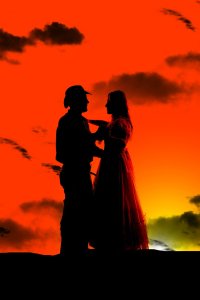
Image by Alan Poulson Photography

The Oregon Trail, near Fort Hall, Idaho, 1849

“Your cooking smells of home.”

The unfamiliar voice drew Órlaith’s attention from the pot where she stewed elk over an open fire. It took a moment for her to realise the man had spoken in Gaedhilge. Shadows danced across his gaunt face. A face she didn’t know.

“I’m Liam.” He bent closer, offering his hand. “From Donegal.” His fingers were long, his grip firm. His dark hair contrasted with his pale skin.

“You’ve the charm of an Irishman, to be sure,” she replied in English. They were in America now. “But we both know half the women in this camp are stewing game tonight. It was a good day for the hunting.”

He laughed, a sound she didn’t hear so much these days.

“Well, there’s none cooking it as well as you.”

A charmer indeed.

She returned her focus to the stew. The scent of wild garlic mingled with the ever-present woody, smoky smell that had clung to her hair and dust-coated clothes for months now.

“It really does smell good.” He hesitated. “Can I buy some?”

She studied him. “I’ve not seen you before.”

“No. We joined you today. My boy was exhausted. We rested, the two of us. Our party went on.” He shrugged. “That’s how it goes.”

“Your boy?” There were so many children on this wretched journey. “How old is he?”

“Danny’s but four years.”

“You both must eat with us. As our guests. No charge.”

“Us?”

“My brother Ruaidhrí and I.” She paused. “We’re all that’s left that were still in Ireland. And there’s my babby, Hope. She’s asleep.” Órlaith nodded towards their canvas-covered prairie schooner. The wagon was the closest thing to home little Hope had experienced so far in her hard, infant life.

“I’m sorry.” A respectful silence hung in the air. The clicking of the cicadas seemed clearer. Then he smiled. “Hope’s a pretty name.”

“Will you sit?” she invited, and he did. “I always wanted a baby girl called Caoimhe. But then I had Hope on the crossing. A babby born on the Western Ocean. Who would’ve thought? We were bound for America. Caoimhe seemed too…”

“Irish.”

A moment of understanding passed between them.

“Yes.”

“And what do they call you?”

“Órlaith.”

“Was it The Hunger took your people, Órlaith?”

“Disease.”

The fire crackled.

“I see.” A horse whinnied, and he turned towards the sound. When his face returned to Órlaith, she saw sincerity etched across his strong features. “My Nancy, she made it through the workhouse. Made it through near-starvation. Made it through the crossing. But she didn’t make it beyond Boston.” A single shake of his head conveyed loss and disbelief. “Cholera. Little Molly too. Buried three thousand miles from home.”

He did see.

“We none of us would’ve expected this, when we were young. This loss.” She picked up a stick and poked the fire. It sparked. “My sister and her husband left in ’44. Went to Oregon to farm. I could never leave, that’s what I thought then. But when my husband Ciarán and my parents died everything became so bleak. It didn’t seem like life would ever get better.”

A dark time. It wasn’t the smoke that caused tears to well in the corners of her eyes.

“There’s such misery in our country,” she continued, a catch in her throat. Their eyes met. Her pain was reflected in his. “That’s when Mary finally convinced us to come join them. My brother-in-law arranged it all. It was a good boat, at least. We were lucky.”

He looked away from her and tugged at the left cuff of his worn shirt. Had he not been on a good boat? She knew of the coffin ships and thanked God she hadn’t given birth in those squalid conditions.

From behind them, Ruaidhrí coughed. “I see you’ve met our new friend.”

She hadn’t noticed her brother’s return.

Ruaidhrí stepped from the edge of the fire’s light and slapped Liam on the back. He made friends easily, always had done.

“Well, I’ll get back to my boy.” Liam stood. “We’ll take you up on your dinner offer.” He glanced at Ruaidhrí. “If your brother doesn’t mind.”

Ruaidhri grinned. “The more the merrier.”

She was in dire need of merriment.

“You’re both very kind.” Liam lingered. “And Órlaith, perhaps later, I might have a dance?”

She looked at the Irishman, tall, not yet old, a survivor. But gentle too, and familiar. Like home. She smiled. “That’d be grand.”

The flames between them flickered and leapt.


My name is Sandy and I am an author

I met with a financial advisor once – once. When he asked about my long-term plans (career, finances, retirement), I replied that I would probably never truly retire, because one day I’d be an author and I would continue to write ’til the day I stopped breathing.

He laughed at me. Out loud. Then he tilted his head and gave me a pitying look. I asked him to leave and went back to my desk and wrote a chapter.

That was in 2001.

I finished that manuscript, a travel biography of my year as a Contiki Tour Manager, then stuck it in a drawer. For years.

I dusted it off once and gave it to a writer friend. “This should be a novel,” she said, so I started turning it into a novel. In late 2012, I got 70000 words into a re-write, then queried it to an agent in Australia. He loved the first three chapters and immediately asked for the rest.

“This isn’t your first book,” he said on the phone a few days later. “It’s good – you’re an excellent writer – but you’re not Liane Moriarty. There are too many narratives, too many characters. Go and write a single narrative – a simple story. Then come back to me.”

Encouraged, I did.

Mining my own (sometimes interesting) life, I turned my true-life love story into a novel. I wrote You Might Meet Someone about a woman in her late-thirties, who – post-breakup – is fed up with men and takes herself on holiday to Greece, sailing the Cyclades Islands. Everyone tells her how she might meet someone – so condescending and unhelpful – but she just wants to travel and soak up the briny air and sunshine. Of course, she does meet someone – make that two someones.

(Aside: in real life, there was only one someone and he is still my someone.)

I went back to the agent. “Hi, do you remember me?” – that sort of thing. He did and said he’d read the first three chapters. Loved them and later that day, he asked for the rest. The next morning, well before I’d had my first cup of tea, I got the call. He’d read it twice and loved it. ‘Eat, Sail, Love,’ he called it.

He represented me for a year – per our contract – to no avail. No publishing deal. In retrospect, my synopsis and pitch were ‘off’, but my agent thought I should add some ‘danger’ to the book – apparently, danger was selling at the time. I wondered how I could do that. How could I turn a travel romcom into a book with danger? We parted ways amicably and I put the book in a (metaphorical) drawer. That was 2015.

In 2016 Ben and I had been together nearly 10 years and we decided to celebrate our real-life ‘meet cute’ with another sailing trip around the Greek Islands with the same skipper.

On return from that wondrous trip, I was inspired to pull out the book and give it another pass. “Why don’t you self-publish on Kindle?” asked my supportive love. I percolated on that question for a short while, gave the book a final edit, handed it off to a colleague with editorial chops, collaborated with a cover artist in London, and – bottom lip firmly between my teeth – published it on Kindle.

My book was out there. I was an author.

Fast forward to our sabbatical in 2018 and I wrote the sequel (also published on Kindle), then book three in the series. Sarah (books one and two) and her sister, Cat (book three), came to life. The men they loved, their travel adventures, their friendships, their internal battles, their journeys to love, came to life.

Concurrently, I soaked up as much as I could about author life. I took a course on building my author profile and engaged with fellow authors on Twitter. I read widely – both within my genre and about the business of being an author.

As I embarked on the indie author path, I tweaked and honed and finessed my pitches to book bloggers, agents and publishers. I joined author communities. I sought and gave feedback. I engaged beta readers and I became a beta reader – I learned what a beta reader is and why they are so important to the writing process. I entered contests and Twitter pitches, and was featured on book blogs and UKRomChat (hi, lovelies – I adore you so much!). I even did my first NaNoWriMo (National Novel Writing Month) and smashed it, writing 70000 words of my third book in three weeks.

I worked my little Aussie bum off.

Along the way, I made friends with some incredibly talented, generous, and supportive people – most of whom I’ve yet to meet face to face. I became part of the writing community.

Excitingly, my blood, sweat and lots of tears – a.k.a. ‘hard work’ – is now paying off. I have a new agent, the inimitable Lina Langlee of the Kate Nash Literary Agency in the UK, and she has secured me a two-book deal (!) with a soon-to-be-named imprint of a soon-to-be-named (big five) publishing house.

It’s happening. I am being published – by a world-renowned publisher.

I am embarking on a long-distance, long-term relationship with an agent who loves my work and believes in me, and a publishing house who described my writing as ‘beautifully sumptuous and evocative’.

So, as I commence writing my fourth book, as I assemble the dream cast for the movies of my books, as I continue to work in a field I (also) love and am great at – adult education – I am humbled, excited, terrified, vindicated, grateful, and … well, I am an author.

p.s. Doesn’t Lina Langlee have the best name ever?

p.s.p.s. If you read either of my first two books while they were out in the world, thank you. They’ll be back. (pssst, please leave a review on Goodreads)

p.s.p.s.p.s. Thank you to William (Bill) Aicher of the Indie Author CoalitionAimee Brown, fellow romance author and leader amongst women; DC Wright-Hammer, who shines the spotlight on fellow authors; Rebecca Langham, who started #AusWrites on Twitter (often the highlight of my day); Jeanna, Eilidh, Lucy and all my fellow authors of UKRomChat on Twitter (always the highlight of my romance author week); Allison and Valerie from the Australian Writers’ Centre; and Jen and Kerry from The Business of Books. Thank you Lindsey Kelk, my favourite author who (actually) replies to my emails. And thank you to my friend, Mike Curato, who took a leap of faith to become a best-selling artist and author.

p.s.p.s.p.s.p.s. Thank you Ben and my sis and my family and Lins and Jen and all my lovely friends. x


Romance Must-reads

I was a romance reader long before I was a romance writer – actually, since I used to sneak Mills and Boon books from my mother’s beside table at the precocious age of 12.

By 13, I’d graduated to Shirley Conran and Jackie Collins, and she’d ‘graduated’ to just handing them to me.

At high school, I read every Sweet Dreams book ever written along with all the other teenage girls in existence. As an adult, I discovered chicklit – mostly romcoms, but also the more heartfelt side of the genre.

And when I read my first Lindsey Kelk book in January 2013, I knew two things. First, I wanted to read all her books (there were 5 then; there are soon to be 13). And second, I wanted to write romance novels.

I still read widely across the genre and wanted to share some (old and new) favourites with you.

AAG - LKThe first in the Tess Brookes series (my fave chicklit series ever) – this book is hilarious.  Buy it here. Kelk’s book that started my love affair with romance writing is I Heart New York, and you can now pre-order the 8th ‘I Heart’ book, I Heart Hawaii.

Outlander

Outlander is, simply, one of the most beautifully-written books I’ve ever read; the prose is sublime. Couple that with a love story that transcends time, it is an absolute must-read. And if you’ve been living under a kilt, there’s also a television show – perhaps the sexiest one on air. I am up to #7 of Diana Gabaldon’s series.

Penny Reid

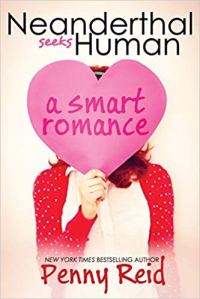
Penny Reid’s Knitting in the City series is terrific, and I devoured book 1, Neanderthal Seeks Human. I am only 3 books in (there are 8, each focussing on a different member of the knitting circle), but the way she crafts distinct characters through first person is just terrific.

Mayes

How I adore Frances Mayes’ writing. She evokes place like no other. Women in Sunlight is not your typical romance novel, as it’s not the primary theme, but I love the approach in this novel which explores love, sex and romance in your 60s.

TTTW

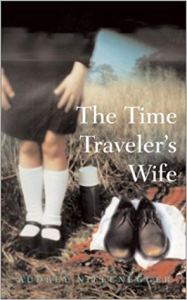
The Time Traveller’s Wife is one of my favourite books – ever. This story will simply take your breath away.

Moyes

The 3rd in the trilogy, this was actually my favourite of the moving, yet hopeful ‘Me Before You’ series. An original concept brings Louisa and Will together in a the most devastating ‘meet cute’ ever. Buy the first one here.

Allende

Traversing generations, Allende has woven a beautiful and epic love story in The Japanese Lover.

Some other lovely romantic reads I’ve loved over the past few months are: Her Brooding Scottish Heir (my first foray into M&B in decades) by Ella Hayes; French Kissing (sexy, funny, dreamy) by Lynne Selby; A Room at the Manor (heartfelt and lovely) by Julie Shackman; A Village Affair (laugh out loud) by Julie Houston; One Way Ticket to Paris (rekindling true love) by Emma Robinson, and Lottie Loser (romance with a dramatic twist) by Dana L. Brown.

I’m making myself stop there and if you think that’s a lot of books, you should see my TBR (to be read) list!

Happy Valentine’s Day or Galentine’s Day or just plain old February 14th.

Sandy xx


A love letter

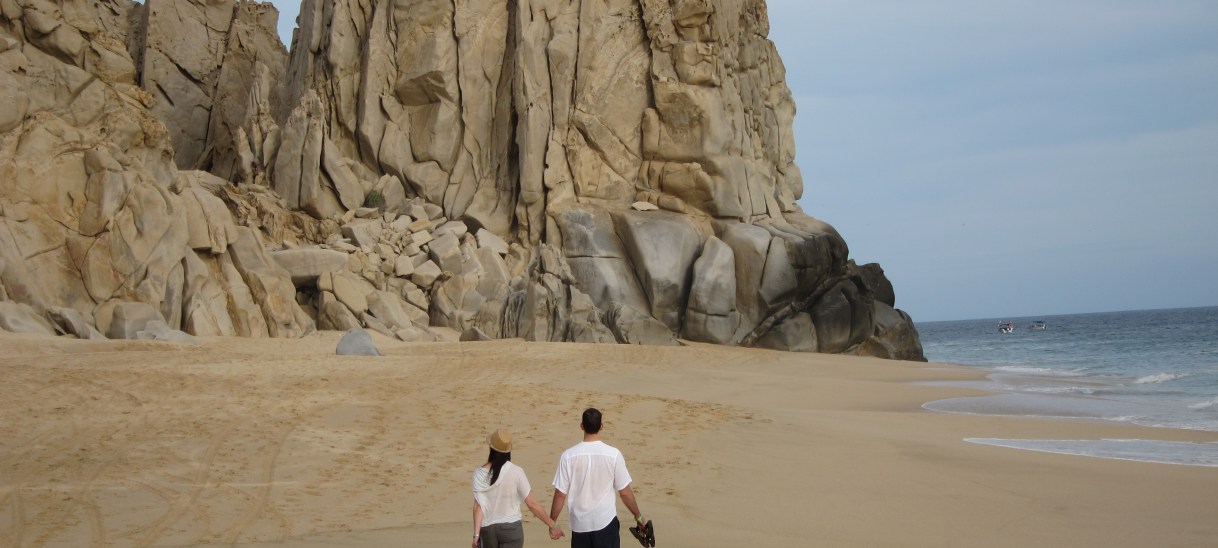
Cabo 2011

How do you thank someone for being the love of your life?

How do you thank someone for truly seeing you and bringing out your best self – your authentic, brave, beautiful, intrepid, generous, creative self?

How do you thank someone for loving you because of – not despite – your myriad of contradictions, flaws, and infuriating habits?

How do you thank someone for seeing the wondrous possibilities, even when you can’t?

How do you thank someone for trusting their heart to you, for letting you see them in their most vulnerable moments?

How do you thank someone for believing in you when self-doubt asserts itself, for championing your efforts as much as your successes?

How do you thank someone for holding you when the pain is extreme – in body, soul, or mind?

How do you thank someone for sharing an in-joke with just a look, for making you laugh so hard you can’t breathe?

How do you thank someone for sharing their family, their childhood memories, their oldest friends with you, making you feel like you’ve always belonged?

How do you thank someone for challenging your mind, for questioning things you’ve always believed, for the mental jousting that makes for great fun?

How do you thank someone for loving your family, for welcoming them, for knowing they must sometimes come first?

How do you thank someone for being your home?

How do you thank someone for being the love of your life?


So, what exactly is #chicklit?

I published my first novel nearly a year ago and I’m about to publish my third. Something I’m often asked—and something I need to define as an author—is what genre I write in.

The long answer is ‘Contemporary Women’s Fiction’, but as this broad category also includes authors like Liane Moriarty and Jodi Picoult, whose books are brilliant but very different from mine, I tend to answer ‘RomCom’ or ‘Chicklit’.

RomCom is a little limiting, however, because in each of my books I delve into heartbreak, goodbyes, loss, and other harsh realities of life, like alcoholism and infidelity. The other day, Ben asked me if I was okay because I started sobbing while sitting at my computer. “I’m just writing a sad scene,” I said and he left me to it. My characters live and breathe in my head; when they’re heartbroken, so am I.

That said, I also write a lot of humour into my books. The main characters are funny women. They’re self-deprecating, smart and witty. Their inner monologues, where they ‘say’ whatever they like, are some of the funniest parts of the books.

In short, I write them to be relatable, well-rounded, flawed, and fabulous women—like your best friends, your sisters, your cousins/aunts/mums, like you.

So, is Chicklit a more apt description of the genre I write? Yes and no.

Yes, because fans of the genre know what type of book they’re getting when they buy one of mine—and it’s likely they’ll enjoy it. And I’m in good company in this genre. Take a look at the Goodreads list of most popular Chick Lit titles. You’ll notice some famous bestsellers, like Bridget Jones’s Diary and The Devil Wears Prada.

And no, because it’s (become) a loaded term. For those who don’t really know what it is, who are afraid to dip their toe in the pool, who might love my books and others that sit in this category if they actually read them, there can be the perception that Chicklit = fluffy nonsense.

This is not true.

Sure, like in any genre, books in this category span the entire spectrum from outstanding to atrocious, but the best examples of the genre are fantastic reads. And, like any genre, the lines are fluid. It includes everything from laugh-out-loud comedies (a la Bridget Jones) to heartbreaking tales like JoJo Moyes’ Me Before You.

A way I can narrow down my specific corner of the genre further, is to identify the books that would sit next to mine on the shelf, those ‘people-who-bought-this-book-also-bought…’ books.

My fave Chicklit author—the one who I want my books to sit next to the most—is Lindsey Kelk.

lindsey-kelk-2-book-bestsellers-collection-about-a-girl-i-heart-new-york

She’s written seven (soon to be eight) I Heart books and three Tess Brookes books, as well as several stand-alones. Her writing is fast-paced, funny, heartfelt, and relatable. She’s a full-time author and her books are sold worldwide, and I feel qualified to say this because I’ve read hundreds of Chicklit books, one of the best in the biz.

So, if I was pressed to give the Twitter pitch definition of Chicklit, I would say this:

It’s fiction about women, for women.

That would leave me 204 characters to further explain that men often read and enjoy it, and some of it is written by men, but I stand by my one-liner.

I am also trying (without a lot of traction at the moment) to get ‘travel romance’ to take off as a sub-genre: exploring the transformative effects of travel on the love-weary. But until it becomes mainstream, I’m happy to inhabit my little corner of Chicklit.