Guest Blogger: Tania Chandler – Authors for Mental Health

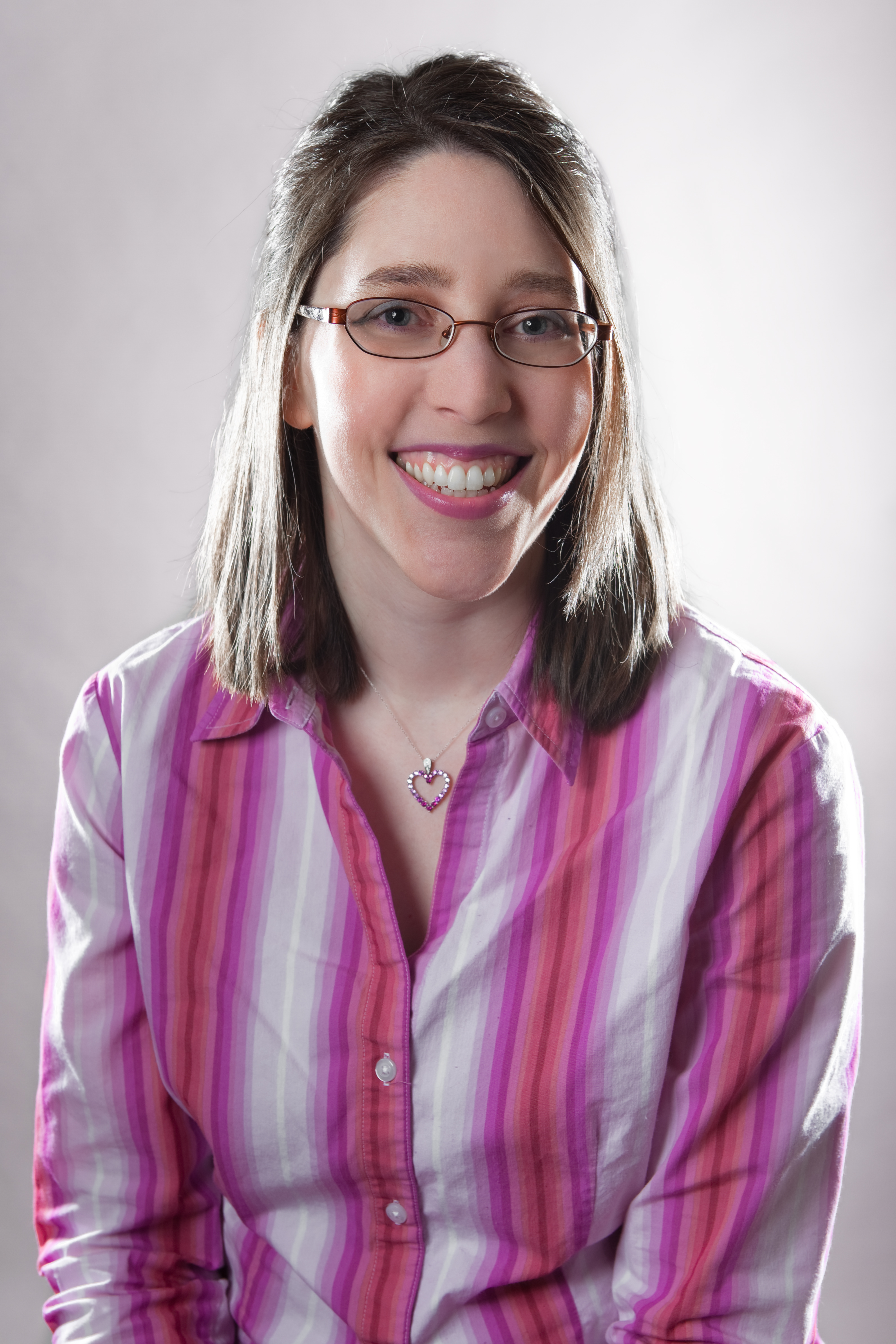
I’m pleased to welcome Tania Chandler to Off the Beaten Track today. Tania is a Melbourne-based writer, writing teacher, and editor. Her books have been published in Australia and internationally; shortlisted for awards and selected for reading programs. Tania writes about time, trauma, memory and mental health. All That I Remember About Dean Cola is her third novel.

Over to you, Tania.

A TORTURED MIND

I wrote All That I Remember About Dean Cola — a novel that examines mental illness and trauma — while battling a major anxiety disorder. Reading back through my journals from the time, I’m not sure how I managed to achieve anything. I have decided to share with Authors for Mental Health part of my experience to let others suffering with anxiety know they are not alone, and to contribute another voice to the conversation hoping to reduce the stigma surrounding mental illness.

At the time, I thought that being unwell was helping me to write, to get into the head of my protagonist, so I didn’t seek help until a few months after finishing Dean Cola. I found a new doctor who ordered blood tests, which showed that some of my brain chemicals were at levels you would expect to find in a patient with a tumour. He introduced me to neuroplasticity brain science, which is about rewiring the brain, and — most importantly — he prescribed a medication that worked for me. Those things were life changing. Life saving.

I have had anxiety all my life. I was first diagnosed with panic disorder and GAD (Generalised Anxiety Disorder) about 20 years ago. Back then, I didn’t believe I had anxiety. I argued with doctors that it was a heart condition and insisted on having tests. Anxiety disorders are different for everybody living with them. For me it has been mostly heart palpitations, insomnia, stomach pain, and fear that I’m dying. ALL THE TIME. Sometimes also breathing difficulties, chest pain, muscle spasms, numbness, tingling, odd aches and pains, shaking, migraines, dissociation, dizziness, visual disturbances, irrational thinking, and a million other emotional and physical symptoms that constantly change, just to keep me guessing. As soon as you get used to one set of symptoms, your anxiety disorder will produce a whole range of new ones for you to deal with. And anxiety disorder is: Sitting on the couch in the middle of the night with chest pain and heart palpitations, breathing into your cupped hands, paddling your feet and doing all the other things your psychologist has told you to do. Phone by your side, ready to call triple 0. Heart attack or panic attack? The symptoms are terrifyingly similar. A false-alarm trip to hospital is not appealing, even less so if you have health anxiety as well. So, you wait and see if you die; if you don’t, then it’s just another panic attack. A psychologist once summed it all up for me so perfectly in just three words: A tortured mind.

Cruelly, becoming a published author — my lifelong dream — only made my anxiety disorder worse. Possibly, I think, because the things that come with putting your work (which is really yourself; it’s hard to separate the two) out there — exposure, judgement, reviews, social media, public speaking — are things I would have previously run a million miles to avoid. And the fear of failure and rejection gets worse too. There is far more (mostly self-imposed) pressure on writing a third book than on a first. I have read a lot of advice recently about not putting your writing (or any kind of work) before your health. I am weighing this up before I commit to writing another novel, while at the same time wondering if not writing is just as hard as writing.

Anxiety sucks — you can’t fight it and you can’t run away from it; it will always win, it will always catch you — but there are ways to cope and learn to live with it. Things (aside from medication) that have helped me include exercise and talking to others. Anxiety doesn’t care much for exercise and usually leaves me alone when I go for long walks or sessions at the gym. Talking to somebody you trust, your GP or a therapist, also brings relief, as do the forums on mental health organisation websites. Lifeline is another helpful service. Anxiety is a terrifying and lonely place to be. It’s hard, but reaching out to find you are not alone feels like letting go of the heaviest weight you’ve been carrying around forever.

Guest Blogger: Jess Hernandez – Authors for Mental Health

It’s a pleasure to welcome Jess Hernandez to Off the Beaten Track today as part of the Authors for Mental Health blog series.

Jess Hernandez is a not only a writer, but also a librarian, teacher and all-around word girl.

When not being used as a human canvas for baby food art, she writes books for kids. Her debut book, First Day of Unicorn School, illustrated by Mariano Epelbaum, was published in 2021 with Capstone. 

Sometimes Jess writes essays, poems, and short stories for grown-ups, too. Jess lives in a very small, very loud house in Washington with her husband, their three children, a puppy and four chickens.

And now over to Jess.

Outrunning My Kidneys

It was an inconvenient time for a breakdown. I was four years into my marriage, five into my career and adulthood was in full swing. I had a dog, a loving husband, car payments, health insurance, and a 401K [superannuation fund]. Things were going pretty much according to plan.

Except I couldn’t have been more miserable if I’d tried.

An average night found me watching Food Network and binge-eating cupcakes on the couch, feeling exhausted and terrified by the things my mind kept telling me. “You’re useless. You’ll never be happy. There’s something wrong with you.” And most pervasively, “What right do you have to feel sad? Nothing really bad has ever happened to you.” For no reason and for every possible reason, it was the absolute worst time of my life.

Using Dr. Google, I tried to cure myself from the outside in. I filled my apartment with houseplants. I took up crochet and started playing the piano again. I prayed and I exercised. When that didn’t work, I quit my job, changed careers, and went back to school. I even moved to a tropical island. (Yes, really.)

But it only made it worse. My very soul hurt, and I fantasised about ways to make it all stop.

Trying to escape my depression was like trying to outrun my kidneys. My job, my apartment, and the weather didn’t make me like this. My brain did, and until I did something about that, nothing would ever change.

So I got help. I got a diagnosis, a therapist, and a prescription. And while the pills have saved my life many times over, the most helpful thing didn’t come in a bottle or on a therapist’s couch.

The best thing I’ve ever done for my depression is to accept it.

Unlike a lot of people, my depression will never go away. It’s not something I’m going to get over or leave behind like an outgrown sweater. I’m permanently and forever mentally ill. It’s part of me, like my crooked nose and bowlegs. I can treat it. I can ignore it. But I’m never going to get rid of it.

It was a tough truth to swallow. I wanted so desperately to be normal again. Every time I felt something like happiness, I wondered, “Is this it? Have I cracked it?” Tentatively, I’d wean myself off pills and declare myself better.

When the darkness inevitably came back, it knocked the wind out of me, and I would grieve the person I once was all over again. It took years, but eventually I learned to understand that this is who I am now. This person who gets hobbled by sadness and gutted by pointless guilt. This is me. I finally kept taking my pills and stopped trying to convince myself I was better. I know now that my depression isn’t going anywhere

It was a hard realisation. But there was some good news, too: there might not be a way out, but there was a way through.

I don’t always feel so bad. Not every day is an uphill slog through endless suck. Instead, it varies. Some days I have depression. It’s like having a cold – a nagging tickle in my throat that I can power through. But some days – not all, but some – depression has me. It kicks me in the teeth and shoves me down the stairs. It stands on my throat and screams in my face. Those days are bad. But I know now they won’t last forever.

What’s more, I survive them. With practice, I learned to see them coming and take cover. I learned to be kind to myself. I talk back to my brain when it tells me I shouldn’t be feeling this way. And I accept that this is not my fault.

Mental illness is not a moral failing or a lack of faith or will power. It’s a straight up medical condition that requires medication, not self-flagellation or guilt. I try forgive myself for being broken and glue myself back together the best I can.

I learned to do it openly, no longer hiding my struggles from people.

At first, I kept my diagnosis to myself. I was scared people would judge or run. Some did. But most didn’t.

Most love and accept me for me. Most wish I’d spoken sooner so they could help. They make space for my illness and try to understand. But that only happened when I stopped being afraid and talked about it. When I did, I discovered I wasn’t nearly as alone as I thought. Instead, my being brave helped others overcome their fear of telling the truth. So I learned to speak up and speak out. I learned there are people I can help.

I’m not saying this is some sort of blessing in disguise. It’s not. But it’s not a death sentence either. I will survive it. I just have to believe that the good things in my life outweigh the daily pain of living. And they do. The biggest things in my life are the good things. And the longer I live, the more good things I have. Like a family and a home and a job I love.

So I stick around.

I keep breathing, even when it hurts. Because there are beautiful things still on the way and I want to be here when they come.

Image ‘Holding You’ by li.fe fotografie. Flickr.

Guest Blogger: Dani Vee – Authors for Mental Health

Today, I welcome guest blogger, Dani Vee, as part of the blog series for Authors for Mental Health. Dani is the host of the popular literary podcast Words and Nerds. Her debut picture book ‘My EXTRAordinary Mum’ is out in August (huge congratulations, Dani) and she loves dark chocolate, camomile tea, and books that surprise her. And she thinks Oscar Wilde is the bomb!

Over to Dani …

AN ANXIOUS MIND

Anxiety is something I’ve always lived with, but haven’t always talked about. It’s taken many forms over the years; sometimes it sits beside me quietly, sometimes it ebbs and flows, and occasionally it swallows me whole. 

If anxiety has always been part of my life, so have creative pursuits, and there have been many – theatre groups, drama classes, bands, writing, podcasting – however, regardless of the creative activity itself, these are the times I feel most as peace. 

NOTHING TRUMPS THE MOMENT

If anxiety is caused by an uncertainty of the future or a sensitivity to a complex world, its kryptonite is presence. Creativity forces us to live in the moment, because when you’re creating something new there is no space to think about what the future may or may not hold. 

BEING AFRAID

The Words and Nerds podcast was born from that fear. I had just come out of the fog of one of the most terrifying and debilitating episodes of anxiety I had ever experienced, triggered by a challenging IVF pregnancy and the sudden passing of my aunty/godmother two weeks after having my first child. I couldn’t function, I woke every morning at three am in the middle of a panic attack and spent every moment as a new mother feeling afraid. 

I went to psychologists, I meditated, I experimented with prescription medications. My mental health improved little by little but there was still something tugging at my gut. Despite knowing very little (aka nothing) about podcasting, I started one. I learnt as I went, I made mistakes, I asked questions but what I didn’t do was stop, because when I was recording an interview, it was the only thing I focused on. For thirty minutes my anxiety no longer existed and this feel good emotion became addictive!

TRIGGERS & CURES

With a clearer head I discovered three confronting things about anxiety: 

  1. anxiety wasn’t always always caused by a specific trigger, 
  2. anxiety didnt have a cure and
  3. creativity was the key to managing an anxious brain.  

The freedom that came with the idea that anxiety is not always caused by a specific trigger was a huge relief! Gone was the over analysis of every single thing I’d done that week and I began to accept that my anxiety was mostly caused by a psychological and physiological response to a complex world. 

The realisation that my anxiety would never be cured was as confronting as it was liberating. So if I have this thing and it’s unlikely to go away, I needed to learn to live with it, maybe even make friends with it and accept that it probably always going to sit beside me. 

As my creative pursuits increase my anxiety decreases. I’m learning to live with its ebbs and flows, and have accepted that my anxiety is dependant on my environment, sleeping pattern, diet, menstrual cycle, health, unexpected stuff life throws my way and sometimes nothing at all. I’m learning to accept that I am likely to have another debilitating episode of anxiety in my future, but I also know I will come out the other side relatively unscathed. 

An anxious brain needs to be gently reminded to live in the moment, and because of this knowledge, I make sure I carve out something creative every single day. I’ve come to view vulnerability as a strength and I’m working on not being so afraid. 

The School of Life says it best ‘Anxiety is not always a sickness, a weakness of the mind or an error to which we should locate a medical solution. It is mostly a reasonable and sensitive response to the genuine strangeness, terror, uncertainty and riskiness of existence.’ 

Coming next: Kate Foster and I will be on Dani’s podcast April 3, with special guests Wendy Demarte, a Mental Health First Aid trainer, and fellow author Anna Whately. We’ll be discussing the how we explore mental health in our writing, how we can practice self-care, and how we can reach out to others to support them.

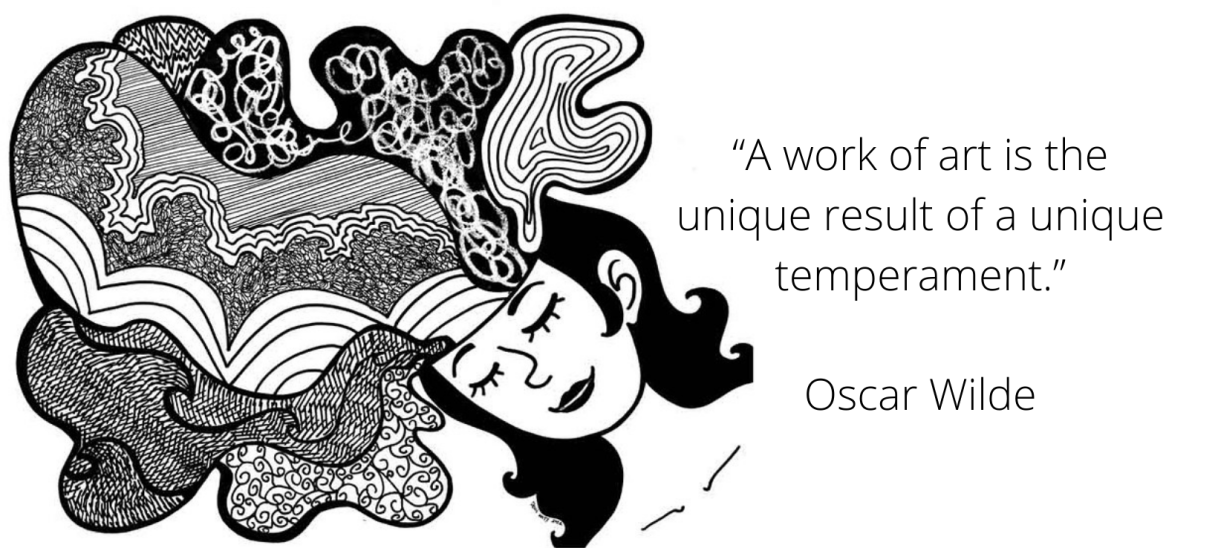
Artwork by: Devil Katy. Image description: Illustration of smiling woman with her eyes closed and ideas and creativity flowing from her mind, depicted as different patterns and swirls.

Guest Blogger: Davina Stone – Authors for Mental Health

Today I welcome the lovely Davina Stone to Off the Beaten Track for another in the Authors for Mental Health blog series.

Davina Stone writes romances about flawed but lovable characters who get it horribly wrong before they finally get it right. They also kiss a fair bit on the way to happily ever after.

Davina grew up in England, before meeting her own hero who whisked her across wild oceans to Australia. She has now lived half her life in both countries, which makes her a hybrid Anglo-Aussie.

When not writing she can be found chasing kangaroos off her veggie patch, dodging snakes, and even staring down the odd crocodile. But despite her many adventures in her heart, she still believes that a nice cup of tea fixes most problems—and of course, that true love conquers all.

Over to you, Davina!

Mental Health – Sometimes We Need to Laugh About It

My current day job is writing sweet, steamy romantic comedies. But for well over two decades, I worked as an occupational therapist (O.T.) in mental health settings. So, when I saw the Beyond Blue initiative, Authors for Mental Health, I had to put my hand up and get involved.

For me there is a close link between what I write and the work I was involved in for most of my adult career. Often writers are advised to write what they know and so I guess that is what I have done. My work as an O.T. has been in hospitals, in people’s homes, in GP’s surgeries and at times on locked wards. I have seen hundreds of people in the depths of a mental health crisis, but more importantly, so much more importantly, I have seen hundreds of people come through those dark times.

I started writing after a health crisis of my own involving extensive heart surgery and a subsequent visit for many months by that unfriendly critter, the black dog depression (Science has proven the link between our heart and mind, a fact writers and artists have known forever—but I digress.) I knew that I wanted to write about characters who struggled with their mental health at times. I knew also that I wanted to write in the romance genre where happily-ever-after is guaranteed. In other words, I wanted to write happy books that weren’t afraid to touch on hard topics.

My characters deal with anxiety and panic attacks, depression, PTSD, and OCD and in my latest manuscript I am writing about self-harm. These are not light topics. But my aim is to write with a light touch, to take the heaviness and shame that often accompany a mental health diagnosis out of the mix. For people to read my books and say—as they have —”I felt like that was me, or I know exactly how it feels to act that way… and I loved the book, it was so much fun,” then I feel in some small way I have achieved what I aimed to.

I have run many group programs to treat anxiety and depression over the years, and what remains clearest in my memory is the resilience, strength and humour of my patients/clients. Life may have dealt them some heavy blows, but they weren’t defeated. They may have been admitted to an in-patient psychiatric ward, but that was not the sum of them. They were not their diagnosis. And they taught me more, I am sure, than I could ever teach them, despite all my training.

The fact that most of us—at least one in four, but honestly, I think that figure is still too low —will experience a crisis in our mental health at some time in our lives means that we are most definitely not alone. And yet the stigma remains; we may be fearful of putting a diagnosis of depression on a job application for example, and even sharing with those closest to us can be a struggle when we are in the depths of psychological pain. So, I guess, by writing these romances, I wanted to be part of a conversation that needs to be open and frank and normalised.

I also truly believe there are times when it is appropriate to laugh about our mental health struggles. Sure, mental health is a very serious topic but our conversations about it do not have to be grim and heavy, as my group participants would testify as we all laughed together at the vicissitudes of life. As one of my closest friends, who has had several incidents of major depression, says very matter-of-factly, “Yeah, I was barking mad at the time.” And then we laugh. What a relief it is to share like this.

So, let’s keep talking, having the conversations we need to have about our mental health, openly, courageously and with humour too in the mix.

And meanwhile, I’ll keep writing my romcoms …

ID: 4 female friends in a car, laughing.

Guest Blogger: Khale McHurst – Authors for Mental Health

Today, as part of the blogging series for Authors for Mental Health, I welcome guest blogger, artist and author, Khale McHurst. Khale creates on the lands of the Wurundjeri people where they live an incredibly boring life with their wife and pets. Khale has been using graphic storytelling to connect with others since their mid-twenties, writing stories about mental illness, recovery, queerness and religious trauma. Khale’s illustrations are influenced by their Australian upbringing (which involved both an avid interest in native flora and fauna, and a steady diet of pop culture) as well as time spent living in rural Japan. Whilst learning to diversify, Khale prefers to create with pen and paper wherever possible.

And now, Khale’s post …

Recovery Through Storytelling

I never set out to write comics about mental illness. I’d read comics as a child – bite-sized adventures peppered with gags, neatly arranged so as to fit into a standard issue. I was not familiar with comic storytelling that addressed Serious Issues. That changed in my mid-twenties, when a doctor diagnosed me with anorexia nervosa (after my then-partner had broken down and begged me to go see one, terrified by my disappearing body).

After the initial flood of information about my failing organs and the importance of weight restoration came other diagnoses. Depression. Anxiety. OCD. My malnourished brain struggled to make sense of it all, and even more so to communicate these struggles to my partner.

I was an illustrator, but once the words ‘mental illness’ became a part of my medical record, the medications started – experimenting with different classes, different brands, different doses. ‘The right fit is out there, we just have to keep trying’. ‘Are you sure you can’t tolerate these side effects?’ ‘Yes, it’s supposed to make you that drowsy’. But worst of all: I couldn’t draw. My artistic passion completely dissipated overnight, and as someone who had always expressed themselves on the page, it felt like having my hands cut off.

This went on for months, thoughts and feelings raging inside me but with no creative outlet. My frustration escaped as crying fits dispersed throughout the work day and desperate bouts of self-harm in the evenings. I needed this out of me. I had to find a way to release the valve.

Comics are deceptively simple. Each panel is just one small drawing. Surely I could manage one small drawing. Once I had drawn one, I drew another, then another in sequence until I had made a page of tiny drawings arranged into some sort of narrative. I showed my partner. ‘This makes much more sense than how you’ve been explaining it to me’, was her response. I made more pages, and each time I showed them to her she understood me better.

What was far more miraculous though, was that I began to understand myself better. I kept drawing, one tiny picture at a time (for the thought of anything grander left me utterly stupefied), writing the story of my diagnosis, and using these pages as a kind of self-directed art therapy.

That was over a decade ago, and the comic born out of those art therapy sessions became a 300-page graphic novel, chronicling my journey with an eating disorder from initial diagnosis to eventual recovery.

I’ve never managed to return to those enormous watercolour paintings I used to create, but with graphic storytelling as my tool, I have been able to win back my sense of artistic self. Better yet, I now have a skill that helps me to make sense of the mess in my brain, which has become increasingly important as I’ve aged. Since my late twenties, I’ve been able to add to my list of diagnoses: bipolar disorder, panic disorder and PTSD. The latter is the subject of my current comic project ‘TRIGGERED: a story of PTSD, a plebiscite and the patriarchy’. The story speaks to a lifelong experience of misogyny and sexual violence, and the work I am doing in trying to find a way to live with my history and the ongoing effects of trauma.

Writing about my trauma has been the most emotionally demanding job I have ever undertaken. It was only in recent years that I even dared to speak to a therapist about my history of sexual abuse, so the process of spelling it out graphically still knocks the wind out of me some days.

I am trying to be considerate in what I portray in my comics. As a survivor, I know the dangers of navigating the world and its triggers. I know naturally that fellow survivors will be drawn to this work – so how do I illustrate traumatic events without triggering those who themselves carry similar trauma?

I made a plan before I began – narrative tools that I could use in order to communicate events without ever directly showing them. Surely that would make my work safe for others. What I spent less time considering was how to make the work safe for myself. I assumed that if I avoided drawing any physical acts taking place, I wouldn’t trigger myself. How wrong I was.

I found that even the simplest drawings – a drawing of the corner of the bed, of the walls, the pattern of the sheets – could dig a hole through my guts and leave me struggling for weeks to get through the day without a full-body flashback.

In writing about my history of abuse, I am forcing myself to keep my trauma ever at the surface – easy to access, my memories as clear as they’ve ever been – but in doing so, making myself vulnerable to the smallest triggers.

I am learning through this process that I need to take things slowly. When I write about trauma, I write at half my usual pace, because so much time is spent in self-care mode, trying to soothe myself against the wave of memories I have unearthed. It is not easy to engage with this story, but I know that it is important to keep sharing it. Shame hates the light, and it is time to take the power out of these secrets I have held for so long.

Image by: Khale McHurst. Image description: Illustration of foxes, running together, with swirls of colour.

Guest Blogger: Kate Foster – Authors for Mental Health

Today, I welcome guest blogger, Kate Foster, to Off the Beaten Track. Along with Kate Gordon, Kate is one of the founders behind an exciting and important initiative, Authors for Mental Health. This initiative has two aims: increase awareness into the importance of good mental health and raise funds for Beyond Blue, an integral Australian organisation, particularly in today’s social, emotional and political landscape. Authors for Mental Health runs through to the first week of April, culminating in an auction (April 1-6) in which generous authors and publishing professionals have donated everything from books to their time and expertise. This post is part of the blog series running through the month of March.

Now over to Kate …

The Truth About Being Strong

I’ve always been considered and referred to as strong. I come from a family of strong people. I come from a world that required strength and patience and compassion. I am proud of being the strong person people can rely on.

We keep going, no matter what. We rise above the petty and trivial. We must be the bigger person and make ourselves available in all situations.

Why? Because there are always people worse off than you. Because tomorrow could bring something worse. Because you are privileged and lucky.

And where all of this is true and I firmly believe in being strong and appreciating how lucky I was and am, my experiences over the past few years (and really my whole life now that I can look back with a better understanding of who I am), my opinion on what strong means is slightly different.

I don’t ever put blame on anyone or anything, because I grew up in the 80s and 90s and times were different, people were different. And understandably so. Families who lived around me had, first and foremost, survival in mind. So, things like awareness and acceptance of autism and mental illness weren’t anyone’s priority ― they were in the background ― and we were only just at the beginning of wider study and understanding. People, certainly where I grew up in the UK, struggled financially, and the generations before me had grown up with even less, so I was taught to be grateful. And I was, always. As I will always be.

However, I knew back then that I wasn’t quite like the other kids around me in school and those who lived on my council estate. But I didn’t complain or ask many questions. I muscled through and processed it all quietly. Honestly, at the time, I assumed everyone thought and felt like I did!

Through school and in social settings, I put myself through the group activities I despised and was afraid of, because it was what everyone else was doing. Through my teens, I mucked about and got drunk despite knowing none of it ever felt right, because it’s what everyone else was doing. Through my years of being a young mother, I didn’t ask for assistance or talk about how lonely or down I felt, because all the other mothers were coping just fine, as had all the millions of mothers before me. Spending many days and weeks in hospitals with all of my children, I saw exactly how sad and much tougher things could be.

And when my kids starting getting older, freeing up more of my alone time, I didn’t understand why I hated myself so much, why I felt so useless and pointless, because people assured me this was when I would start loving life and enjoying my freedom. They said I should get out there and embrace the world and find opportunities. No one liked a misery guts.

And yes, I thought that was the one and only way it had to be done. It was what everyone else was doing, carving out careers and socialising, and the fact I was so unhappy meant I was broken. And god forbid I tell anyone how miserable I was, about the intrusive, evil thoughts I had about myself, because it would expose how selfish and shallow and pathetic I was. Look what I had – I was incredibly lucky, after all.

If I opened up about it, I would no longer be strong. The exact thing I was always told to be.

Inevitably, all the years of forcing myself to fit in led to complete and utter burnout, with diagnoses of severe depression, OCD, and acute anxiety. Wow. And I was autistic. I actually wasn’t like everyone else, and the enormous toll that had taken on my reserves, to keep being strong and not admit I was struggling to keep up, had destroyed me. It took a series of reckless and dark thoughts that eventually led me to seek the help I needed.

And that’s when I truly believe I became my strongest.

Regardless of the fact that I am autistic, which makes all the simple life stuff a tad more stressful than for most people, the moment I asked for help and shared my most vulnerable thoughts with people who I knew would listen, who I could trust, a light turned on inside me.

Being strong wasn’t always about putting my head down and getting on with it. Being strong wasn’t about ignoring my pain and confusion, thinking I was broken because no one else was complaining. Being strong wasn’t one pathway. It was several.

I found a balance.

Strong is still about being resilient. But strong is also admitting to myself when I can’t bounce back straight away and need time to recover and reflect. Resilience isn’t always immediate.

Strong is still about putting others first. But strong is also asking for help sometimes, so I can continue to help those more vulnerable. Being strong isn’t an individual effort.

Strong is still fighting off the dark thoughts. But strong is not burying them. It’s facing them and talking about them. Being strong isn’t about hiding the things we think make us look weak.

So, if there’s one thing I’ve learnt over the years and through my mistakes, it’s to ask for help when I need it. That’s still not always easy to do, because I sometimes recognise a little too late when I’m sinking, but the simple act of asking for help shows I’m stronger than I ever have been.

xx

Kate

Image by: faungg’s photos (FLICKR) Description: Deliberately stacked and balanced piles of multi-coloured rocks on a rocky patch of ground.

Authors for Mental Health Blog Series

This month, I will be hosting some guest bloggers on Off the Beaten Track as part of the initiative Authors for Mental Health.

This initiative has two aims: increase awareness into the importance of good mental health and raise funds for Beyond Blue, an integral Australian organisation, particularly in today’s social, emotional and political landscape. Authors for Mental Health runs through to the first week of April, culminating in an auction (April 1-6) in which generous authors and publishing professionals have donated everything from books to their time and expertise.

So why have I raised my hand to be part of Authors for Mental Health?

That question is both simple to answer – I have suffered from anxiety since childhood and bouts of depression since early adulthood – and complex.

Mental illness affects me, and many of my loved ones – friends as well as family members – and colleagues. And good mental health is just as important as good physical health. Yet, we – as a society – still attach a stigma to mental illness. We make it difficult for people to put their hand up and say, ‘I suffer from mental illness’ or, ‘I need help.’ We don’t have enough support measure in place. For many of us, we don’t have the vocabulary to explain mental illness, even to ourselves, so how can we begin to understand it?

So, when Kate Foster reached out to ask if I’d donate an item for the auction, I said, ‘All the yeses.’ And then I offered to help with the blog series and other aspects that I could contribute to.

Because good mental health DOES matter. It is critical and should be a priority for all of us, looking after our own mental health. And for those who don’t yet have the vocabulary to understand it, or the courage to ask for help, maybe, just maybe, this initiative will make their path a little easier.

Depression has hit me hard at various times in my adult life. For me, it usually manifests as despondency, a feeling that creeps up on me until I am in the thick of it and see no way out of it – a feeling that it isn’t worth doing anything, going anywhere, seeing anyone. A feeling that it’s not worth participating in life at all, and yes, at times I have had thoughts of suicide.

With ‘lower-grade’ depression (as I think of it), something that has raised its head several times in the past two years, sometimes for weeks on end, I get frustrated and angry – from zero to fury in a matter of seconds – about things that really don’t matter. Or I’ll sob uncontrollably, my body wracked with pain and fear that it will never end – though, in the moment, not truly knowing what ‘it’ is.

And I still have the occasional panic attack, though usually in situations where I feel claustrophobic, as though I need to escape but can’t. For me, naming it is the most powerful tool for overcoming it. ‘I am having a panic attack,’ I’ll tell the person I’m with. In one instance, I had to ring the call button on a flight, so I could say, ‘I am having a panic attack.’ The man next to me quickly stood and let me out and the flight attendant ushered me to the galley where I was given water and space to breathe. My partner, Ben, has been with me for several attacks. At first, he’d ask, ‘What do you want me to do?’ He now knows to give me space, to speak to me in soothing tones, and to coach me to slow my breathing – his empathy helps.

With depression, I had a break-through when we were living in Seattle, a city I loved but one in which you live under grey skies for 10 months a year. I wrote about that in this post, The Gray, and it was only in retrospect that I realised I was smack dab in the middle of depression when I wrote it. Here’s an excerpt:

‘Your mood is gray. You crave nothing, hate nothing. Everything is neutral. Extremes have no place in your existence. Your soul has been doused in peroxide. Sometimes, just there in the periphery, you see glimpses of passion, of disagreement and debate. Yet you have succumbed to the numbing, and do not participate.’

When I showed up at the GP and she asked what she could help with, I burst into tears and sobbed through an explanation of what was going on. As a New Mexican (one of the hottest, sunniest states in the US), she had first-hand knowledge of the additional stress that grey weather puts on mental health. After listening to me blubber for a good five minutes, she said, ‘Honey, you’re depressed.’ More specifically, I had Seasonal Affective Disorder (SAD).

The relief at having a diagnosis was overshadowed by self-flagellation. How had I not realised? I’d suffered from depression before – how had I not recognised that it had taken hold again?

The doctor prescribed Vitamin D supplements and medication. The medication, however, made me nauseous and woozy 24/7 and after several weeks, I decided, ‘No, not for me.’ What else could I try? Well, if I was missing the sun, I could replicate it, right? I bought myself a blue light and I started going to hot yoga three times a week. I also talked openly about my depression. I asked for help and understanding from my partner and friends – and (I am so grateful for this), I got it. Though, I never raised it at work. I didn’t feel safe enough in that environment to tell my colleagues, my boss. That stigma! In the throws of depression, I was simply ‘difficult to work with’ and ‘surly’ ‘always unhappy’.

Now, 13 years after the SAD diagnosis, I am better at recognising the signs that depression may be taking hold. But only better, not perfect. It still catches me unawares at times, particularly during the ‘Groundhog Day’ existence of Melbourne lockdowns.

So, that’s why I have raised my hand to help bring awareness to the importance of treating our mental health the same way we do our physical health – by prioritising it, by be empathetic to ourselves and others, by building the vocabulary we need to talk about it openly and effectively – and without judgement.

Please, please, please – take care of yourself, make your mental health a priority, if you haven’t already, and if you need it, ask for help. It’s out there.

Cover Reveal for A Sunrise over Bali

I am VERY excited and proud to show off this gorgeous cover for the 4th book in the Holiday Romance series, A Sunrise over Bali.

A sun rising over the sea between two volcanic mountains. A temple and several huts in the mid-ground. A woman in a teal dress and a white hat walking into scene (on the beach) in the foreground. Palm trees either side of the beach scene.

This is an evolution of the series covers, putting Jaelee Tan, our heroine, in the stunning location of Bali but still retaining the styling and ombré colour palette of the first 3 books in the series. I love it!

The blurb

Jaelee Tan is going on sabbatical.

After meeting besties Cat, Lou, and Dani on a whirlwind trip around Europe, Jaelee is finding it difficult to settle back into Miami life, especially without her ex, Paco. When she shows up to her best friend Ali’s 40th birthday party and Paco and his new wife are two of the guests, she does what any self-respecting woman would do – she runs.

All the way to Bali.

Convinced that a two-month sabbatical away from her high-stress Miami life is just the ticket, she settles into UROP, a co-living resort for digital nomads in the heart of Ubud. There she meets an incredible group of people, each with something to teach her about life and love, including the Hot Scot, Alistair, who may just make her change her mind about man buns – and love.

My inspiration

I was inspired to write this book because in 2018, when Ben and I were on our year-long sabbatical, we kicked off with a 2-month stay at a co-living space called ROAM in Ubud, Bali. We worked (a little), we played (a lot), we explored, and we spent many days just being. It was a brilliant, revitalising time for us both and an excellent way to start an incredible year.

We also made lifelong friends in Bali, including a dog called Lu.

Lu made it into the book―I didn’t even bother to change her name―but in real-life, she was facing euthanasia during our last 2 weeks at ROAM. She lived there but not ‘officially’ and was very protective of the community members. This made her dangerous for the public, scuppering plans that the owners of ROAM had to expand. However, the community (current and former ROAMIES) rallied and we raised enough money to send her to California where she now lives on an enormous property with a former ROAMIE. I love Lu and I am so glad she has a proper home now.

Tan dog with white paws and black markings on her face, lounging on steps

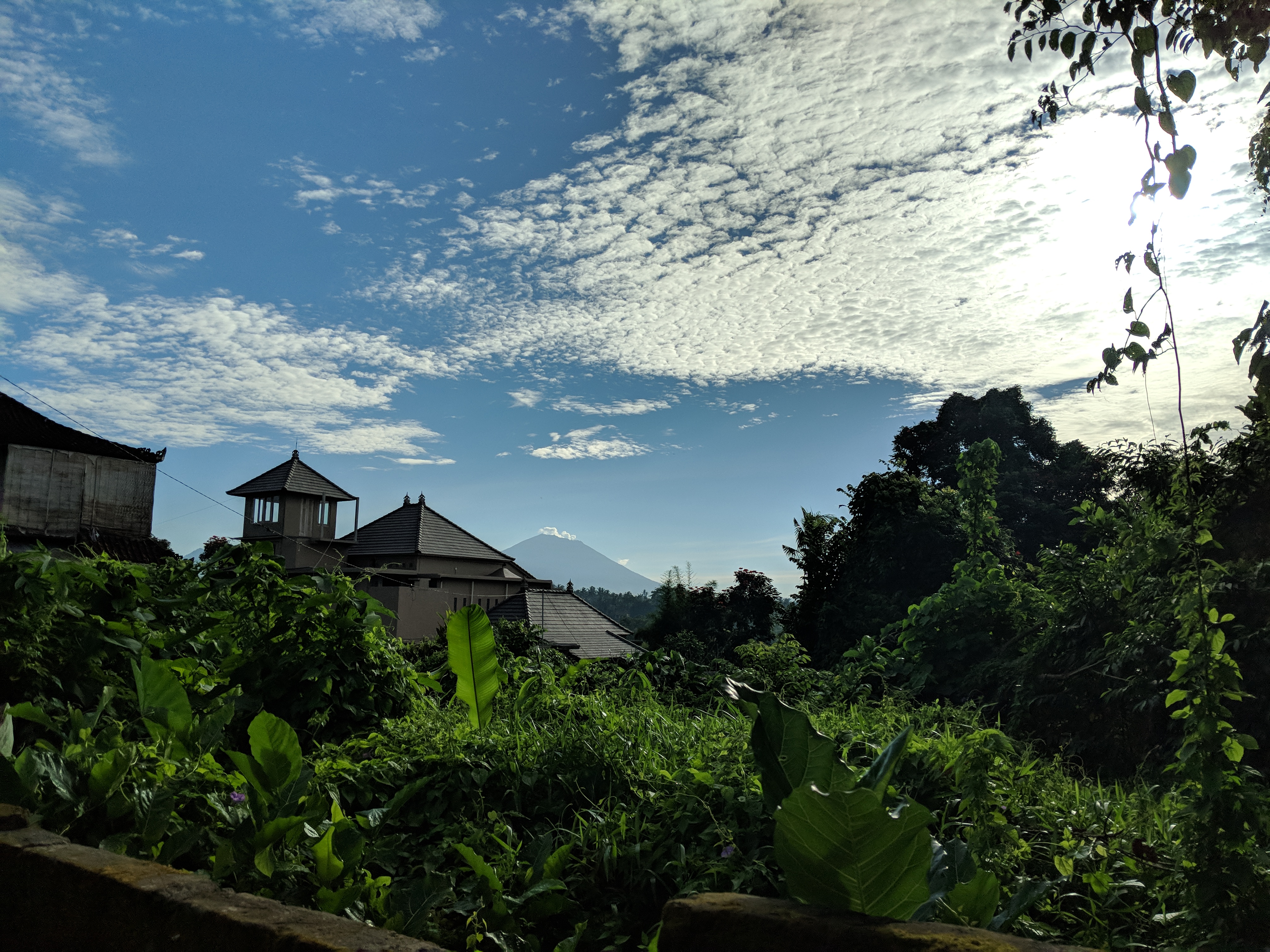
And some other inspiration pics from Bali―I kept these close at hand throughout the writing process, so I could really capture the magic of this beautiful place.

And my fave shot of me in Bali (this made it into the book too)

Woman on a bamboo swing which is suspended from a tree branch overlooking a valley of lush green.
The swing on the Campuhan Trail

I really hope you enjoy reading A Sunrise over Bali. It holds a special place in my heart and I’m really proud of it. It’s out on February 17 (ebook) and May 12 (print).

New Year’s Absolutions 2022

Those of you who have been following my blog for a while will know that each year I write not ‘resolutions’, but ‘absolutions’.

These are the things I absolve myself from doing the following year―GUILT FREE!

Either I will remove them from my mental ‘to do’ list or I will stop doing them because they do not ‘spark joy’. These are the things I have been told―by myself, by loved ones, by society―that I should do but really, really don’t want to.

So, on the list they go!

1. Reading the entire contents of my Kindle

As an avid reader, I have a problem―I cannot say no to books. I buy a lot of books, I get given a lot of books … but I have too many books. TOO MANY BOOKS! Every time I finish a book, I am paralysed by choice as to what to read next. I flick through the (literally) dozens of pages of unread books on my Kindle and often end up tossing it on the bed in frustration and turning on Netflix.

I like choice. Choice is good―there is a book for every mood on my Kindle: spy thriller, (gruesome) crime thriller, LA detective thriller, romcom, contemporary romance, contemporary women’s fiction, literary fiction, historical fiction, historical romance, outback romance, even some fantasy, SciFi and horror …

The thing is, I have at least a dozen unread books in each genre (and sub-genre) taunting me.

In the past few days, I have taken steps to mitigate this paralysing guilt of owning so many unread books. Collections! I have decided my next 3 reads and everything else has gone into a TBR Collection―a neat little folder that I can swipe past all at once on my Kindle’s ‘home’ screen. Now I just need to stop acquiring more books. Hmm.

2. Meditating

In mid-2022, I signed up for a weekly meditation session at work (facilitated by a colleague) to help us cope with the pandemic. Half-way through the first session, conducted via TEAMS, I received a Teams message―apparently ‘urgent’―and I spent the rest of the meditation session putting out a (small) professional fire―essentially, the opposite of meditating.

The thing is, I not only suck at meditating, I (really) dislike it. I spend the whole time chastising myself for sucking at it and not being better at ‘adulting’.

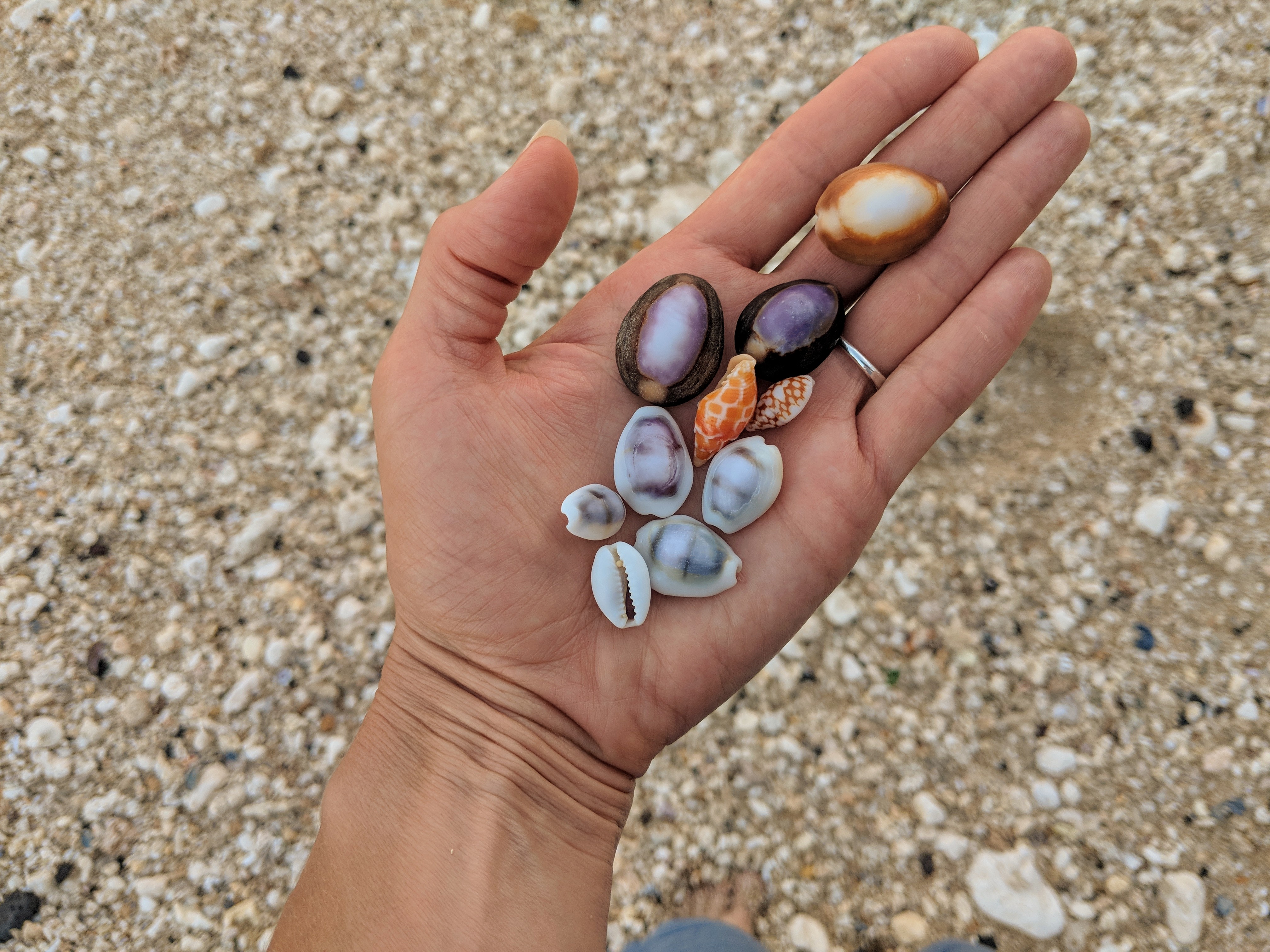
Well, I absolve myself from meditating in 2022 because there are other ways to ‘be mindful’. Any time you are completely immersed in something―reading, dancing, cooking, revelling in natural beauty, combing the beach for the prettiest shell, sipping great wine and really tasting it, playing with a child and making them laugh, in the midst of an in-depth conversation, smashing out a new chapter or editing one―you are being mindful.

So, I aim to be mindful in the way that works for me without beating myself up about how I get to that immersive, blissful state.

3. Watching ‘Squid Game

I tried (2 full episodes) and I hated it (not just the premise but the lead actor’s―in my opinion, terrible―acting). I know it’s considered ‘good TV’ by millions of people but no piece of fiction is for everyone―just ask my readers―so it’s okay that I didn’t like it and that I won’t finish the season.

4. Getting a TikTok account

It’s not that there aren’t many, many entertaining people on TikTok, nor that I haven’t enjoyed the occasional TikTok (I don’t even know if that’s the correct term―are the clips on TikTok called TikToks?) that people have sent to me (case in point, this is hilarious).

It’s that I already spend 5-12 hours a week on social media for author biz. That’s not just posting, but creating assets, and commenting and sharing―and thanking others for commenting and sharing.

I just don’t have room in my life for another social media account. I felt the same way about Snapchat (and I was right about that BTW―remember Snapchat, anyone?)

5. Not making travel plans because ‘what if I have to cancel them?’

This is a double negative, I know.

To be clear, I absolve myself from not making travel plans, which means that 2022 is FILLED with travel plans. Sure, we’re buying the best insurance we can get and we’re mindful (that word again) that any or all of these trips may be cancelled, but for me and Ben, travel IS life.

So, trips on the cards:

  • Southern coast of New South Wales to see friends (who live there)
  • Inland in Victoria to see my cousins (who live there)
  • Up to southern Queensland/norther NSW to see family and friends (who live there)
  • Western Australia to see family (who live there). They have been behind the COVID Curtain implemented by Premier Mark McGowan for so long, I can’t even fly there to be with my mom who is recovering from a serious injury and is bed bound. (Grrrr, Mark!)
  • The UK (!) to: see my family (sis, bro-in-law, nephew) in Rugby and Great-Aunt in Oxfordshire; meet my agent, Lina, and dear friend, Nina, face to face in Edinburgh; attend the Romance Novelists Association 2022 Conference; attend the HarperCollins author party; meet Pearson colleagues in London; meet my editor and other members of the One More Chapter publishing team, also in London; and catch up with other friends across the UK. (It’ll be a long trip.)
  • Sailing the Cyclades Islands in Greece! I am SO excited about this. Ben and I will be sailing with our skipper friend, Patrick―our 3rd time sailing with him. Athens to Syros―8 days, 7 nights―and we’re taking my nephew, who will be 11 by then. (Aside: for those who have read the Holiday Romance series, Patrick is the real-life Duncan, only he’s a Kiwi).

So LOTS to look forward to in 2022, especially as I am absolving myself of so many things that will save me not just time, but angst, guilt, and regret.

And what could be a better way to start the New Year?

Happy 2022, everyone, and may it be filled with reunions, grand adventures, and many moments that will make you smile, fill your heart, and bring you peace and joy.

Catching up with Author Jennifer Irwin

It is my pleasure to welcome author, Jennifer Irwin to Off the Beaten track today to mark the publication of her second novel, A Dress the Colour of the Moon. Jen and I ‘met’ in 2018 as fellow indie authors right after I read her incredible debut, A Dress the Colour of the Sky. Honestly, that book blew me away. Jen’s writing is both taut – laden with tension – and beautifully poetic. Her understanding of our humanity is evident in both her stories and her prose. This is why I leapt at the opportunity to be an early reader ‘Moon’, but more on that later. First, let’s chat to Jen.

Cover of A Dress the Color of the Moon - a woman facing away in a mooncoloured dress on a dark blue background. A crescent moon rises above her head.

Tell us what inspired you to write A Dress the Colour of the Moon?

When I wrote the prequel, A Dress the Color of the Sky, I left the ending open in case I decided to continue with the story. When many of my readers expressed an interest in knowing how Prue fared in the world after rehab, that was all the motivation I needed. Deep down, I wasn’t ready to say goodbye to Prudence Aldrich either.

When did you start writing seriously?

After my divorce, I was determined to write a book that was loosely based on my life. I began making writing a priority and scheduling time to write every day. It took me three years to complete my debut novel which released in 2017, so to answer your question, I’d say I started writing seriously in 2014.

What do you love most about being an author?

I love reading reviews and receiving messages from readers who have been touched by my books. It is truly the most incredible feeling and one which never gets old.

What are you working on now?

I’ve completed the first draft of my third novel called The Ad Agency. It is an unlikely love story between Sebastian who has been severely burned in a car accident and dreams of being a copy writer, and Bettina, an assistant art director who descends from Spanish royalty. They are two misfits from different worlds who fall in love regardless of the odds going against them.

Oh, that sounds fantastic. Lastly, what do you hope readers will take away from A Dress the Colour of the Moon?

Many people in our country have been affected by addiction either directly or indirectly. It is my hope that readers will learn more about the recovery process by following a few of my characters through their post-rehab journey. As a victim of sexual assault, I also hope that my readers find solace in knowing that it is possible to heal and move forward from past traumatic experiences.

About the book

Prudence Aldrich is a sex addict. Five weeks ago, she checked into the Serenity Hills rehab center to prevent that addiction from ruining every important relationship in her life. Now Prue must face the trail of destruction she left behind, including mending the broken bond with her teenage son, finalizing the divorce with her husband, Nick, and using a newly learned set of skills to ward off her insatiable cravings for male attention—a compulsion that puts her friendship with lifelong pal Lily to the test.

Adding ever further complications to the hurdles in her path is the arrival into town of Alistair Prescott, her in-rehab romantic obsession, and the one person in the world most capable of throwing Prue off her recovery. Meanwhile, Serenity Hills counselor Mike Sullivan is undergoing a crisis of his own—one that will drive him to the rediscovery of a lifelong passion . . . and causing him to cross paths again with Prue, his former patient.

A Dress the Color of the Moon tracks the rocky and sometimes disastrous path to recovery—a recovery that will require Prudence and her friends to face down the demons of their pasts while learning to accept the fearful uncertainty that comes with living life on your own two feet.

My thoughts on the book

This is a much anticipated read for me, as I was immediately captivated by Book 1 A Dress the Colour of the Sky, and Jennifer Irwin does not disappoint. This book has so much heart and truth, with beautifully written, flawed and relatable characters just doing their best to find their way. Irwin’s prose is superb – both succinct and poetic. I laughed aloud, I cried, and I highlighted dozens of passages.

This can be read as a stand-alone, but Book 1 is also highly recommended.

Where you can get it (print and ebook)

Amazon US | Amazon UK | Amazon AU | Amazon CA

Target (US) | Barnes & Noble (US) | Waterstones (UK) | Booktopia (AU)

More about Jennifer

Author Jennifer Irwin sitting on steps and wearing a pink top and dark purple trousers. She has long light brown hair and is smiling.

Jennifer Irwin’s debut novel, A Dress the Color of the Sky, was published in 2017 and has received rave reviews, won seven book awards, and was optioned for a feature film. Jennifer’s short stories have appeared in numerous literary publications including California’s Emerging Writers: An Anthology of Fiction. Jennifer is represented by Prentis Literary and currently resides in Los Angeles.

Follow Jen

Website | Twitter | Instagram | Facebook | Goodreads

Thank you for your thoughtful and candid responses, Jen, and wishing you every success with your stunning second book.